
Is the path fixed?
Decision check
If the same trigger and rules should produce the same result, a simple automation or RPA task may be enough.
Choose based on the work. A chatbot is usually conversation-first. A simple automation follows known rules. RPA carries specified steps through an interface. Custom software creates a broader capability. An automation agency builds a custom system. A managed AI worker carries one defined recurring workflow.
Start with the workflow, then choose the smallest solution that fits.
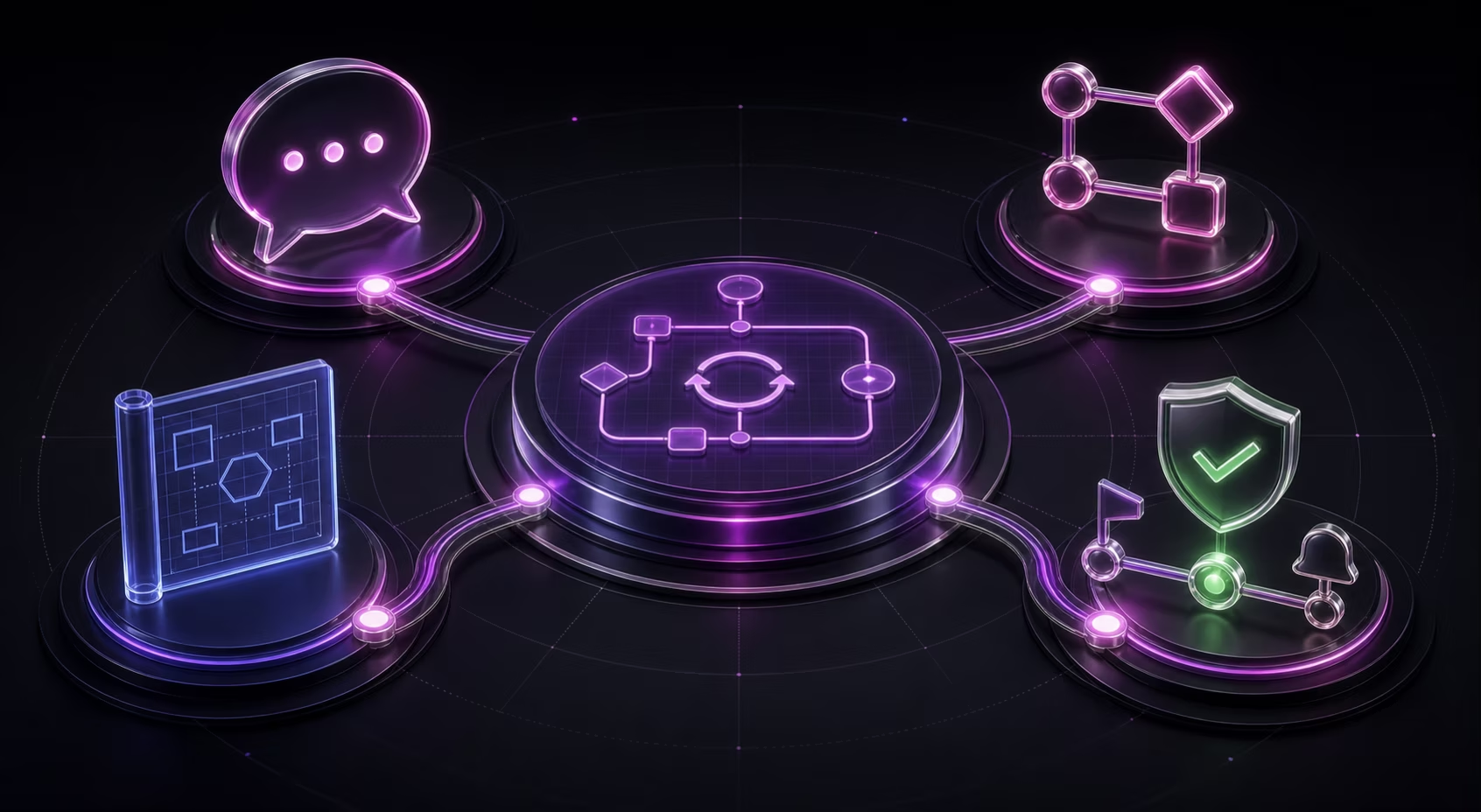
Chatbots are strongest when the job lives in a conversation. Simple automations are strongest when a clear trigger should create a predictable action. RPA can fit a stable task that follows specified steps through an application interface.
Agencies design and build custom systems, with ongoing ownership varying by provider. Custom software needs a durable product owner and release plan. Workers is Taurist's managed model for one mapped recurring workflow with approval, escalation, monitoring, and maintenance.
These categories overlap. The practical differences are the job shape, whether the path is stable or screen-oriented, how people stay involved, and who owns changes after launch.
| Decision point | Chatbot | Simple automation | RPA | Custom software | Automation agency | Managed AI worker |
|---|---|---|---|---|---|---|
| Primary purpose | Handle a conversational exchange | Repeat a fixed trigger-and-action sequence | Carry defined steps through an application interface | Create a tailored product or business capability | Design and build a custom system | Carry a defined recurring workflow |
| Best fit | Questions, guidance, intake, or conversational routing | Stable rules and predictable steps | Stable, screen-oriented tasks with defined paths | A broader, evolving capability that needs product ownership | A custom project that needs outside implementation | Multi-step recurring work with review boundaries |
| Typical limit | The job may stay inside the conversation | Exceptions and changing judgment can break the rule | Interface or process changes can require the path to be reviewed | Requires a durable product, technical, and maintenance commitment | The operating model depends on the provider and scope | The workflow must be explainable and have an owner |
| Who sets it up | Your team or a vendor | Usually your team or a builder | Your team or an implementation partner | Your team or a development partner | The agency | Taurist maps and builds it with the business |
| Human oversight | Handoff or review depends on configuration | Added as explicit rules or approval steps | Designed into the task path and exception handling | Designed into the product, operations, and release process | Depends on the designed system | Mapped into approval and escalation rules |
| After launch | Your team manages content and behavior | Your team usually owns updates and failures | Your team or provider maintains the task path as systems change | Your team or provider owns the roadmap, releases, and maintenance | Handoff, support, or management varies | Taurist monitors and maintains the worker |
Typical patterns only. Specific products and providers may combine more than one model. Use the exact task path, exception rate, and ownership model to make the choice.
Start with the smallest model that fits the workflow. Then document where a person reviews, stops, or changes the path.
Decision check
If the same trigger and rules should produce the same result, a simple automation or RPA task may be enough.
Decision check
If the work follows a stable path through an application, assess whether an RPA-style task is a practical fit.
Decision check
If the work depends on changing context, incomplete inputs, or nuanced decisions, define the approval and escalation boundary first.
Decision check
Choose only after the business has named who reviews exceptions, updates the workflow, and confirms what done means.
Decision check
If the work needs a durable roadmap, releases, and a broader capability beyond one mapped workflow, assess custom software ownership before choosing a workflow solution.
This framework is practical guidance, not a universal assessment. It draws on OpenAI's guide to agentic and deterministic workflows and the voluntary NIST AI Risk Management Framework and Generative AI Profile.
A managed AI worker is not automatically the right answer. Match the solution to the workflow, the exceptions, and the ownership your team can support.
The primary job is answering, guiding, collecting details, or routing a request inside a conversation.
A stable trigger should create the same predictable action and your team can own the setup and updates.
A stable, screen-oriented task needs defined steps through an application interface and the exception path is known.
The business needs a broader product or capability that will evolve beyond one bounded workflow and has a team ready to own its roadmap and releases.
You need a custom project and can verify its discovery, handoff, approval, monitoring, and maintenance model.
Recurring work spans several steps, needs approval and escalation rules, and should stay monitored and maintained.
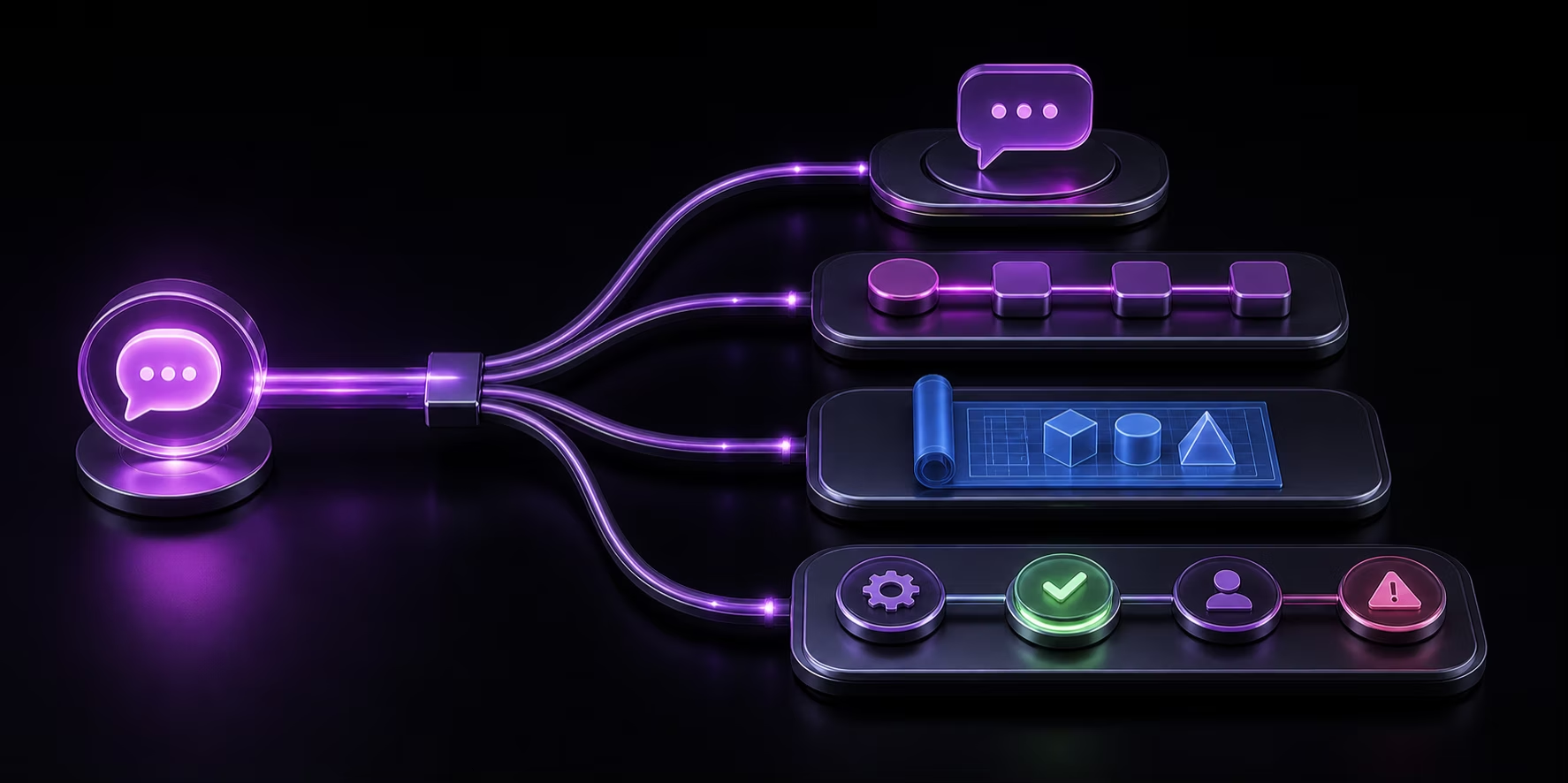
The same business need can call for a conversation, a fixed rule, a screen-oriented task, a product capability, a custom project, or a managed recurring workflow.
Collects information and answers common questions inside the conversation.
Moves a complete form into the next known system or queue.
Follows a specified application path for complete, predictable information and hands known exceptions to a person or queue.
Creates a reusable product or system when the organization needs to own a broader and evolving capability beyond the single intake workflow.
Designs a custom intake and routing project around the agreed scope.
Prepares missing-detail follow-up, routes exceptions, queues sensitive steps, and escalates uncertainty.
This is an illustrative workflow comparison, not a fixed template, customer case study, integration claim, or promised outcome.
The workflow map shows whether the right answer is a chatbot, a simple automation, RPA, custom software, a custom build, or a managed worker.
Workflow map
What starts the recurring work?
Workflow map
What information does the work need?
Workflow map
Which rules and judgment points shape the next step?
Workflow map
What must pause for a person before action?
Workflow map
Who knows whether the output is right?
Workflow map
What evidence shows the workflow is complete?
Start with what repeats, what changes, where judgment belongs, and who will own the workflow.
Map the trigger, decisions, approvals, owner, and definition of done before choosing the solution.
No. A chatbot is usually designed around a conversation. A managed AI worker is mapped around a recurring workflow, including its trigger, inputs, steps, approval rules, escalation path, owner, monitoring, and maintenance.
A chatbot may be enough when the main job is answering questions, collecting information, guiding someone, or routing a request inside a conversation.
A simple automation may be enough when a recognizable trigger should always create the same predictable action and your team can own the setup and updates.
RPA can be a practical fit when a task follows defined steps through an application interface, the path is stable enough to specify, and the team has a plan for exceptions and interface changes. It is not a universal substitute for conversational, ambiguous, or judgment-heavy workflow work.
Custom software can be a better fit when the business needs a broader product or capability that will evolve beyond one defined workflow and has a clear owner for the roadmap, releases, and maintenance. Start by deciding whether the need is a durable product commitment or one bounded recurring job.
Workers is a managed AI worker service built around one defined recurring workflow. An automation agency may build a similar system, but agency scope and after-launch ownership vary. Compare the workflow mapping, approval, escalation, monitoring, and maintenance model—not only the label.
No. The workflow has a human process owner. Approval rules define what pauses for review, and unclear or sensitive work escalates to a person.
Start with the workflow. Identify what triggers it, what information it uses, what decisions it contains, what needs approval, who owns it, and what counts as done. Then choose the smallest operating model that fits.
One clear recurring workflow can show whether you need a chatbot, a simple automation, RPA, custom software, a custom project, or a managed AI worker.