
Frequency
Readiness check
The work happens often enough to matter: daily, weekly, monthly, or whenever the same trigger appears.
A good first AI worker starts with work your team already repeats: a clear owner, recognizable inputs, known tools, reviewable outputs, and approval rules that keep people in control.
Start with one recurring workflow. No pricing, timeline, or build commitment is implied by the map.
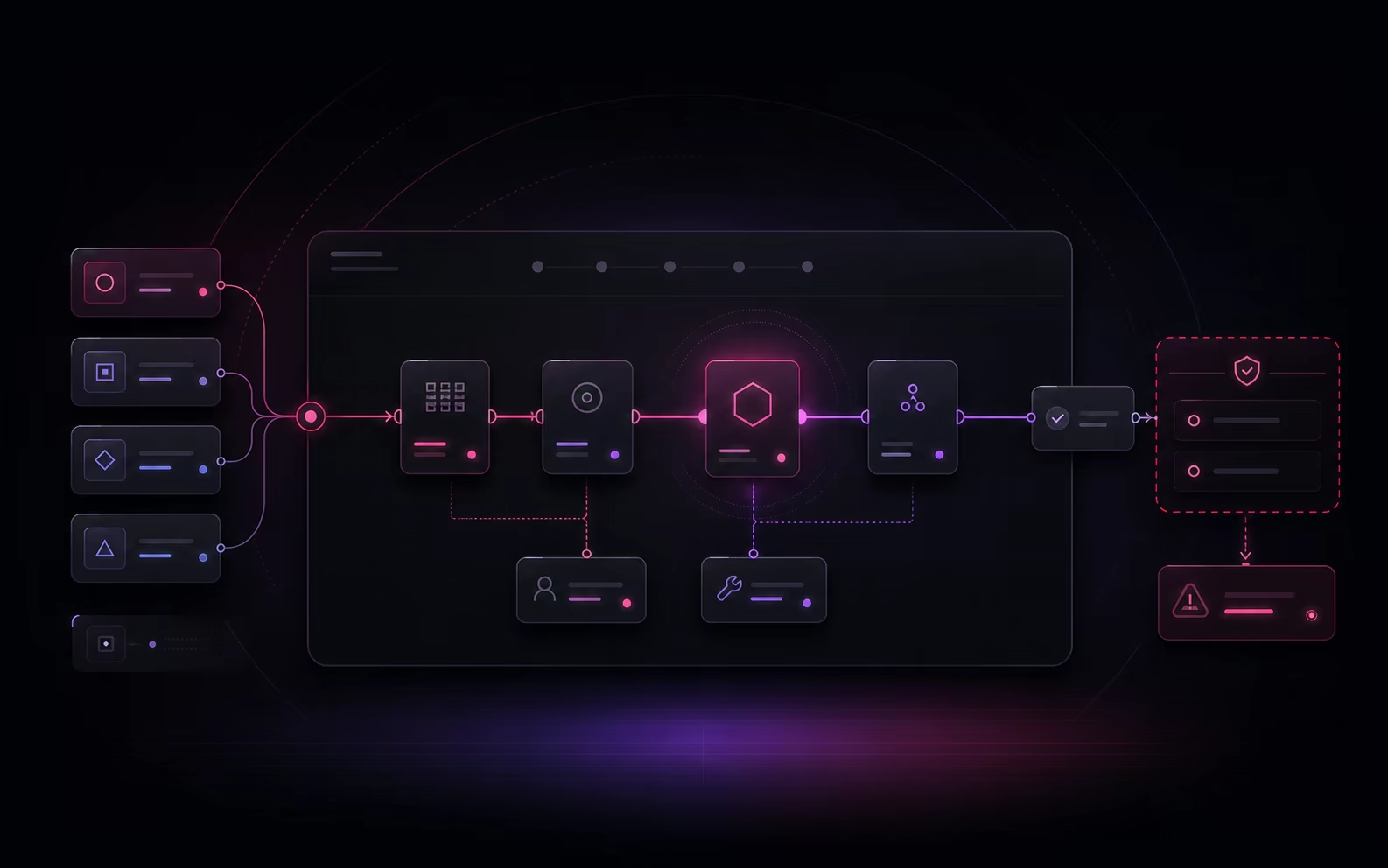
A workflow is ready for a managed AI worker when it repeats often, has a clear owner, uses recognizable inputs, touches known tools, creates reviewable outputs, and can be bounded by approval rules and escalation paths.
If one of those pieces is missing, it may still be a candidate, but it needs mapping before it becomes a first worker. For missing, conflicting, stale, or duplicate inputs, define what should pause, who resolves the issue, and what permits the next step. Check the input rules below.
The map does not start with a generic agent. It starts by naming the parts of a real workflow that can be reviewed, bounded, and managed.
Readiness check
The work happens often enough to matter: daily, weekly, monthly, or whenever the same trigger appears.
Readiness check
Someone knows when the workflow was handled correctly and can review edge cases before launch.
Readiness check
The worker can recognize the requests, records, messages, files, forms, or updates that start the work.
Readiness check
The workflow already touches known systems, documents, inboxes, CRMs, calendars, or internal tools.
Readiness check
The result can be drafted, routed, summarized, updated, prepared, or queued for a person to approve.
Readiness check
The team can name what should pause for human review and what should escalate instead of proceeding.
A recognizable request is only the starting point. Before delegating its next step, decide how the workflow should handle information that is missing, conflicting, out of date, or already acted on.
For example, a repeat intake request may contain a new date but no reference number. The useful next step is to identify the request and resolve the date with its owner before preparing another update. This is an illustrative planning example, not a customer result.
Write these rules into the workflow brief, then include each condition in a pre-production evaluation. A written rule is a requirement to test; it does not establish that a particular Worker already implements the control.
List the information required for the next step and separate it from helpful context. If a request has no record identifier, the workflow should not guess which record to change. Define whether it should prepare a clarification for review or return the request to its owner. Continue only when the required information is supplied or a person approves a narrower task.
Decide which source governs each field and what happens when two sources disagree. A request and a stored record may show different dates; recency alone does not establish authority. Keep the disagreement visible and name the person who can resolve it. Until that rule or decision exists, keep the affected action paused rather than silently choosing a value.
Specify which facts need to be current at the moment of action. A status copied into a report may have changed before a follow-up is prepared. Agree on a freshness rule appropriate to the workflow and a way to confirm it. If current information cannot be checked, return the affected step for review instead of treating the old snapshot as current.
Identify how the team recognizes the same request arriving twice and how it checks whether the intended action already happened. Two similar messages are not necessarily the same job. Before allowing another update or follow-up, define the matching rule and the evidence of completion. When identity or completion is uncertain, ask an owner to reconcile the work before repeating it.
Framework basis: NIST AI RMF on context, oversight, and testing; the OpenAI agent guide on explicit steps for incomplete information; and Anthropic's agent guidance on feedback and stopping conditions. These four checks are our practical synthesis, not a certification or a claim about a deployed system.
The goal is not to force AI into every process. The goal is to find the first recurring workflow that can be mapped with enough control to trust.
These are examples, not fixed templates or customer case studies.
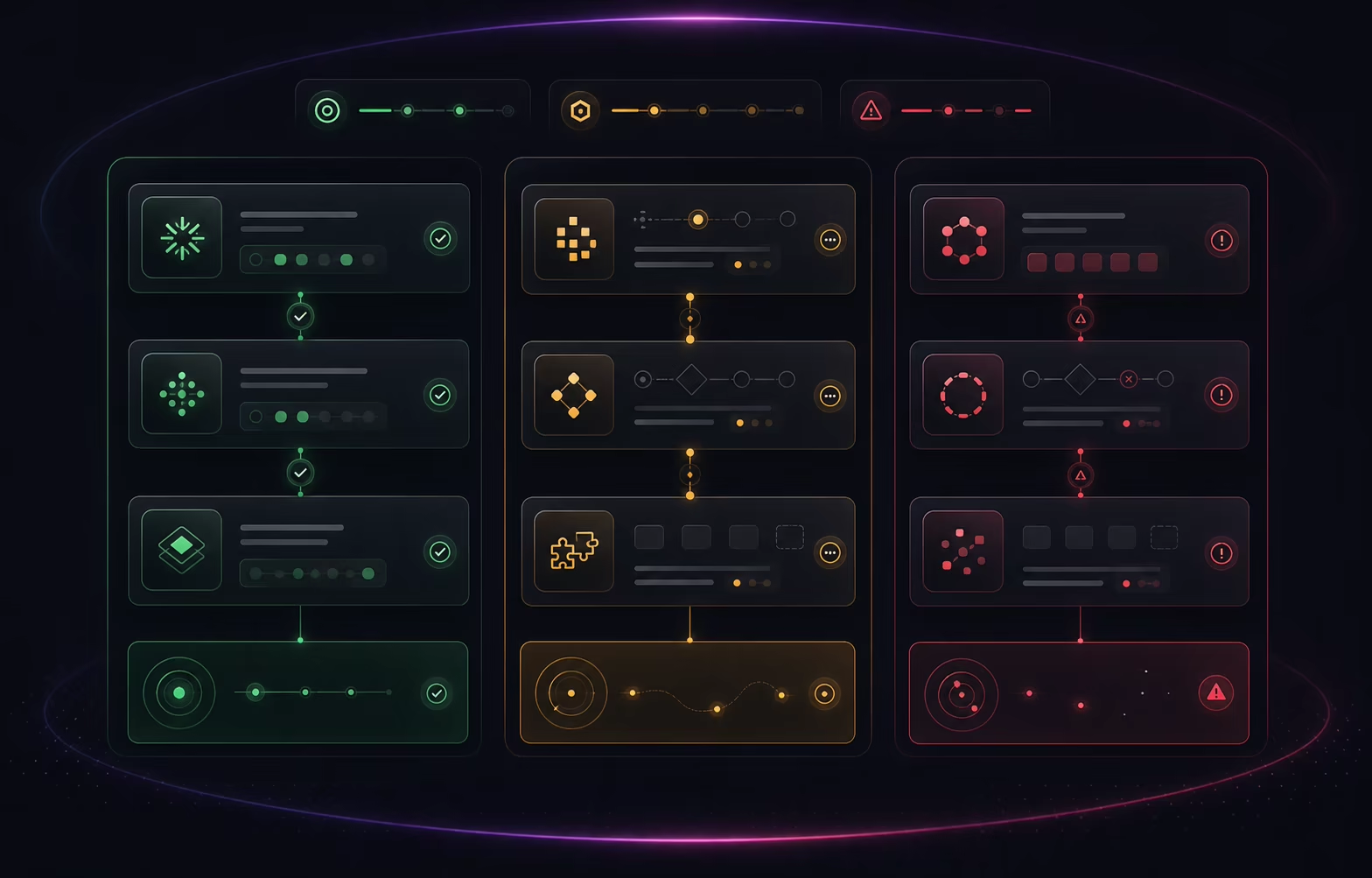
Map each step in one recurring workflow into the lane it earns today. A worker can make the work easier to review without taking ownership of every decision in it.
Delegate with boundaries
Use this lane when the input is recognizable, the result is easy to check, and a mistake can be corrected without creating a high-impact outcome.
Draft, then review
Use this lane when the worker can organize, draft, or recommend, but context, judgment, or a customer-facing outcome still needs an owner to approve it.
Keep human-owned
Keep the step human when it makes a high-impact decision, creates a permanent external consequence, or needs legal, medical, financial, compliance, or safety-sensitive judgment.
This is a workflow-design heuristic, not a safety, legal, or compliance standard. If the action is unclear or sensitive, route it to a person instead of letting the workflow proceed.
For general governance context, see the NIST AI RMF Core, OWASP guidance on excessive agency, and the UK Government introduction to AI assurance.
After the workflow is mapped, Taurist can see what the worker should draft, route, summarize, update, pause, and escalate.

Name the recurring work, trigger, owner, inputs, systems, and expected output.
Map where the worker needs context and where drafted or routed work should land.
Mark the decisions, exceptions, and customer-facing actions that should stay human-reviewed.
Turn the map into a managed worker with a focused task, readable outputs, and escalation paths.
Keep the worker watched, maintained, and adjusted as the workflow changes.
The page is meant to help you decide what is ready, what needs mapping, and what should stay human-reviewed.
Map one recurring process and see whether it has the owner, inputs, outputs, and approval rules a first worker needs.
Define the required information, the source that governs each field, when facts must be checked again, and how to recognize work that was already handled. For each unresolved condition, name the step that pauses, the person who resolves it, and the evidence needed to continue. Record these rules in the workflow brief and test them before delegating live work; a written rule alone does not prove a Worker implements it.
A workflow readiness check is a practical review of one recurring workflow before it becomes an AI worker. It looks at the trigger, owner, inputs, tools, output, approval rules, and escalation path.
A good first AI worker handles repeated work with recognizable inputs, known tools, a clear owner, a reviewable output, and approval boundaries that keep people in control.
Messy workflows can still be candidates, but they usually need mapping first. The scan helps separate what is ready to delegate from what needs clearer inputs, ownership, or approval rules.
An AI worker should not make high-risk decisions, take permanent customer or financial actions, or handle legal, medical, financial, compliance, or safety-sensitive judgment without human review.
A worker can handle repeatable, bounded steps with recognizable inputs and reviewable outputs. Use draft-and-review when a person should approve the decision or customer-facing result. Keep high-impact, permanent, unclear, or sensitive judgment human-owned and route exceptions to a person.
No. A chatbot usually responds inside a conversation. A managed AI worker is built around a defined recurring workflow with tools, outputs, approval rules, monitoring, maintenance, and escalation.
Taurist reviews the workflow map with you, identifies what the worker can draft, route, update, or summarize, and marks where human approval should stay in the loop.
The map helps identify whether that workflow is ready, what needs definition first, and where human approval should stay in the loop.