Notes / Conversion Works
Can shoppers tell what your Black Friday offer is actually worth?
Review Black Friday offer tests, clarify prices and bundle contents, and plan a CRO experiment that considers purchases, costs and returns for your store.
By Edu Rigonato. Published Sep 17, 2026. 12 min read.
Imagine a customer looking at an espresso-machine bundle before Black Friday. The machine looks right. The page says 20% off. There is a code below the price, a grinder in the photograph and a free-shipping message at the top of the site.
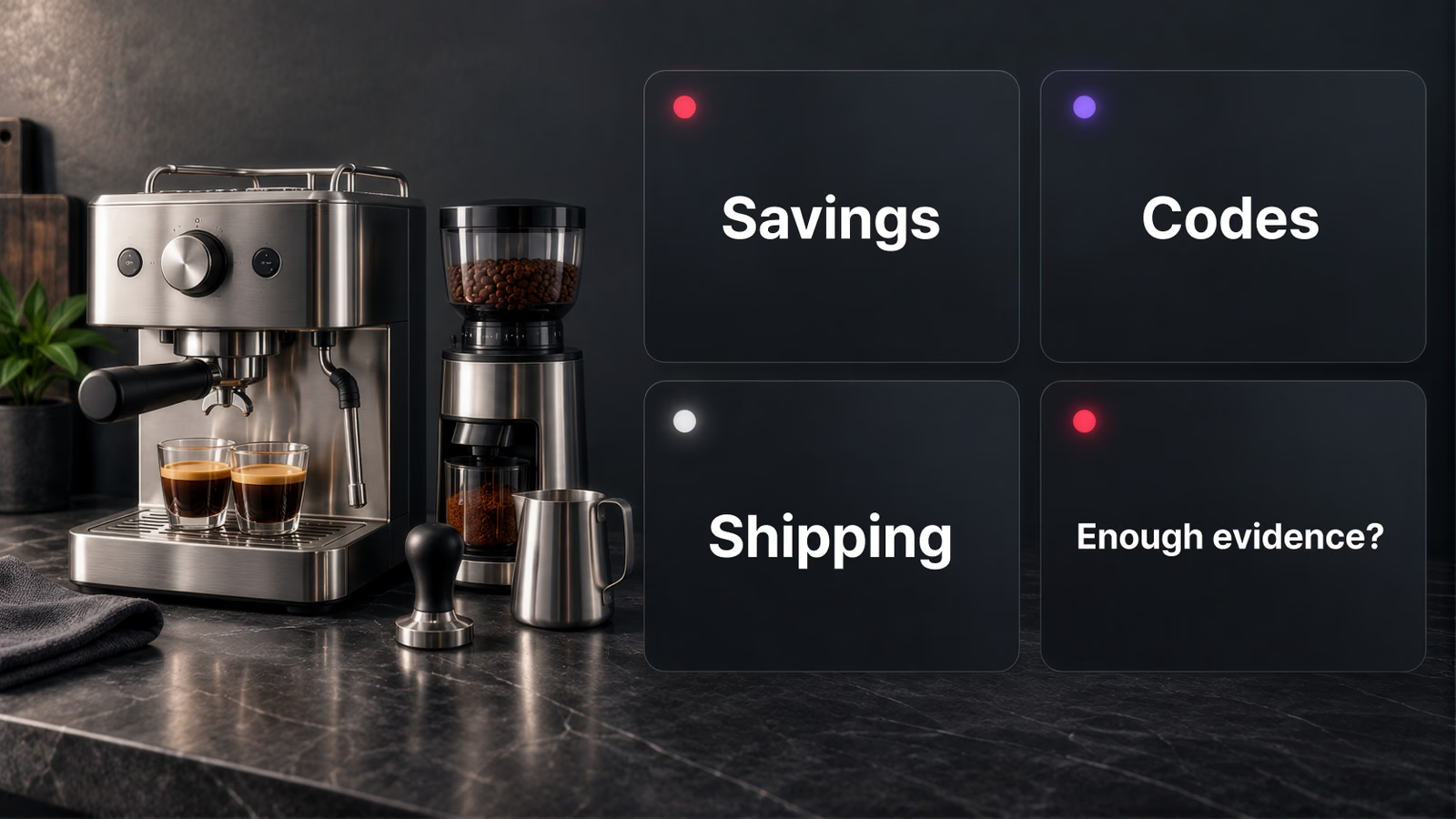
Before buying, the customer still has to work out what they will pay, whether the grinder is included and whether the shipping offer applies after the discount. This is an illustrative example, but it gives us a useful place to start: which part of the offer is the page leaving the customer to figure out?
I would make the selected price, included items and qualifying conditions clear together, then test that explanation while keeping the deal the same. A bigger discount is a different decision. We need to know whether the current offer is difficult to understand before deciding it needs to be more generous.
There are A/B tests that support examining this area. There are also tests where another savings label made little difference, and a bundle recommendation performed worse. Here is how I would use those findings to prepare a product page for Black Friday and Cyber Monday, or BFCM.
Can shoppers see what they will actually pay?
Start with the selected product and follow its price from the collection page to checkout. Does the customer see the same offer throughout? If they change the configuration, does the displayed saving still apply?
In Convertibles' BFCM test for a luxury pajama brand , the control showed a regular price of 98 with a 25% discount available through a code. The variation displayed the crossed-out regular price and the calculated 48.50 price, with the code requirement still visible. The offer stayed the same on the product and collection pages; its presentation changed.
The agency reports that the calculated-price version won. Its January 2026 report does not disclose the sample, test duration or statistical uncertainty, and it does not explain its monthly revenue projection. I would use this as a concrete treatment to consider, without borrowing the revenue headline or assuming it will work for our store.
Frequently asked questions
Should we show the saving in dollars or as a percentage?
Start with the applicable purchase price, then test whether another saving label helps. <a class="inl" href="https://conversion.com/blog/using-pricing-psychology/">Conversion's 2021 pricing report</a> includes a price-dependent framing test that reported improvement, but another test in the same article found that price styling performed better without the extra dollar-saving message. Those reports do not justify a universal rule based on crossing 00. Choose a treatment that addresses what customers are having trouble understanding.
How should we show a price that requires a code?
Keep the condition attached to the price, as in the <a class="inl" href="https://convertibles.dev/blogs/case-studies/bfcm-sale-price-presentation-case-study">Convertibles test</a>. State the code the customer needs and verify the same eligible selection through checkout. If you want to test automatically applying the discount, record that as another change to the experience. A clearer label does not establish the effect of automatic application.
Should the free-shipping threshold apply before or after the discount?
That depends on the merchant's actual policy and economics. For the clarity test, keep the existing calculation unchanged and explain it accurately where it affects the order. Changing the calculation is a shipping-policy experiment. Test a basket near the threshold with and without the code so the page message matches the amount checkout actually uses.
What if we cannot get a dependable A/B result before BFCM?
Use the time to fix reproducible pricing errors and observe customers selecting the offer. Ask them to explain what they will pay, what is included and how they qualify. That can uncover a specific problem, but it does not establish a conversion lift. Keep an inconclusive test labeled inconclusive and avoid rolling out a larger commercial change because a short run happens to look positive.
If we had to design this appliance offer for BFCM
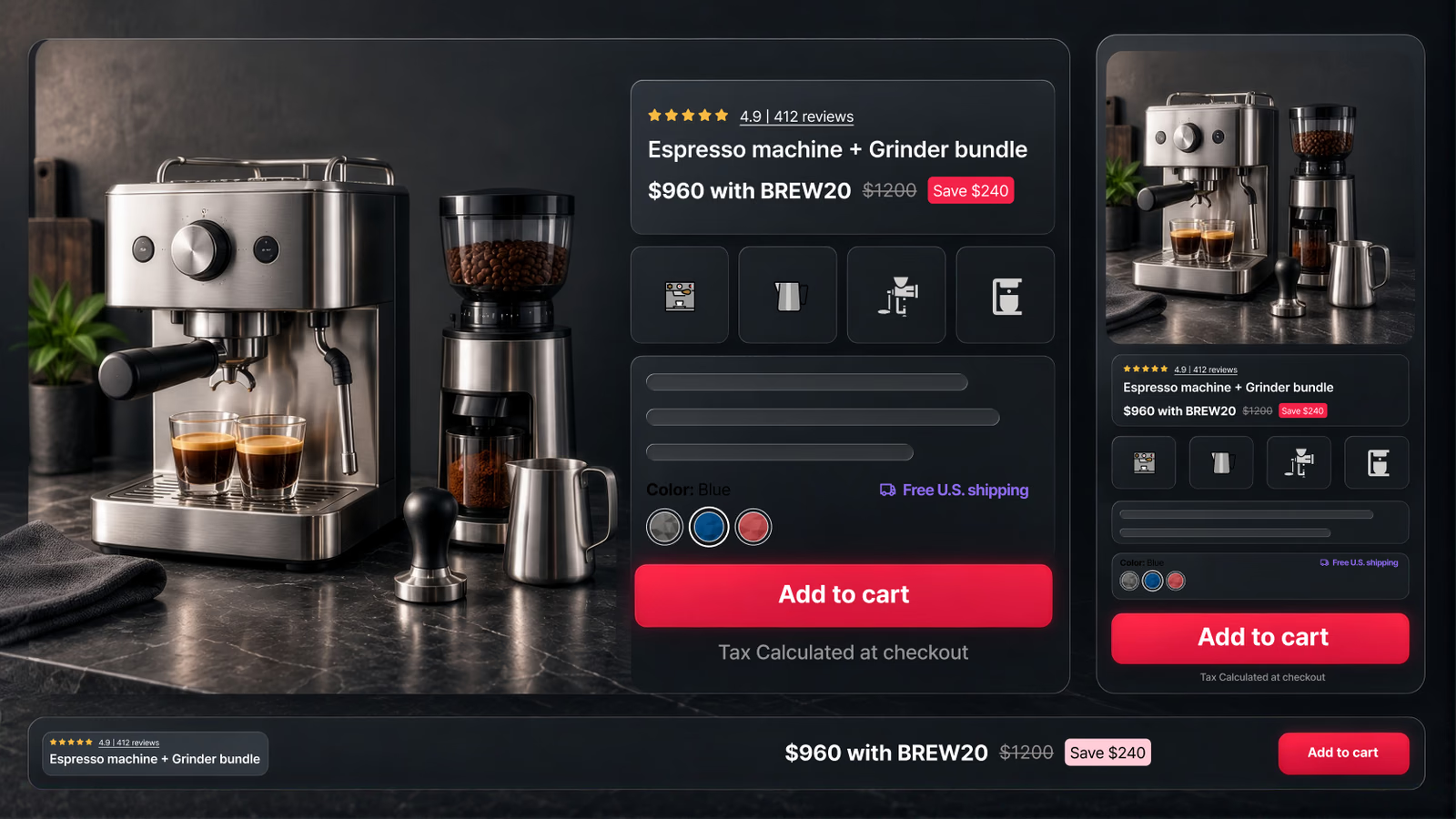
Here is how I would bring this together. The example above is a fictional US espresso-machine bundle, with illustrative prices and terms. It is a proposed design to test, not a merchant screenshot or a winning variation.
The bundle's regular price is ,200. A valid 20% BREW20 code makes it $960, saving $240 against that same bundle price. The machine, grinder, portafilter, tamper and milk pitcher are included. For this example, standard shipping to the contiguous US is free when the merchandise subtotal reaches $900 after discounts; the code cannot be combined with another offer. Tax is calculated at checkout. These assumptions exist only to make the design concrete.
I would place the $960 code price beside the ,200 comparison price, keep the code requirement directly underneath, and show the included items before Add to Cart. The shipping line would confirm that this selected bundle qualifies under the stated example policy. On mobile, I would keep the same order of information and let the contents stack vertically.
The control and variation would offer exactly the same products and terms. What changes is how easily the customer can put the purchase together.
Pick one of your own product pages and ask someone to explain its offer without helping them. Where they have to guess gives us a useful starting point for the next CRO review.
Explore Conversion Works