Notes / Workers
Your priorities changed. How do you tell your AI Worker?
Change your AI Worker's priorities without losing unfinished work. Learn what to clarify, who decides and how to check that the new plan took effect.
By Edu Rigonato. Published Nov 11, 2026. 11 min read.
At nine, the plan is to prepare three client review packets for tomorrow. At twenty past nine, you need one of them before lunch. You tell the person doing the work which client comes first and work out what that means for the other two.
What would that conversation look like with an AI Worker?
Consider a fictional service business assessing a Worker for that packet-preparation and coordination job. The owner wants one packet brought forward. A colleague still expects the original order. Some work has already been done, and a request for missing information may already have gone out.
“Do this one first” leaves a few things open. Should the current step stop? Are the other packets still due tomorrow? Who can settle the colleague's competing request?
To change a Worker's priorities, use the instruction route agreed for its job, identify the work affected and explain what should happen to the earlier commitments. Check how the new direction was understood and when it can take effect. Whether it can switch during a running step depends on the actual setup; sending a message does not itself show that the switch happened.
That is something to establish before you rely on it during a busy morning.
What are you actually changing?
Start with the difference you want to make to the work.
Frequently asked questions
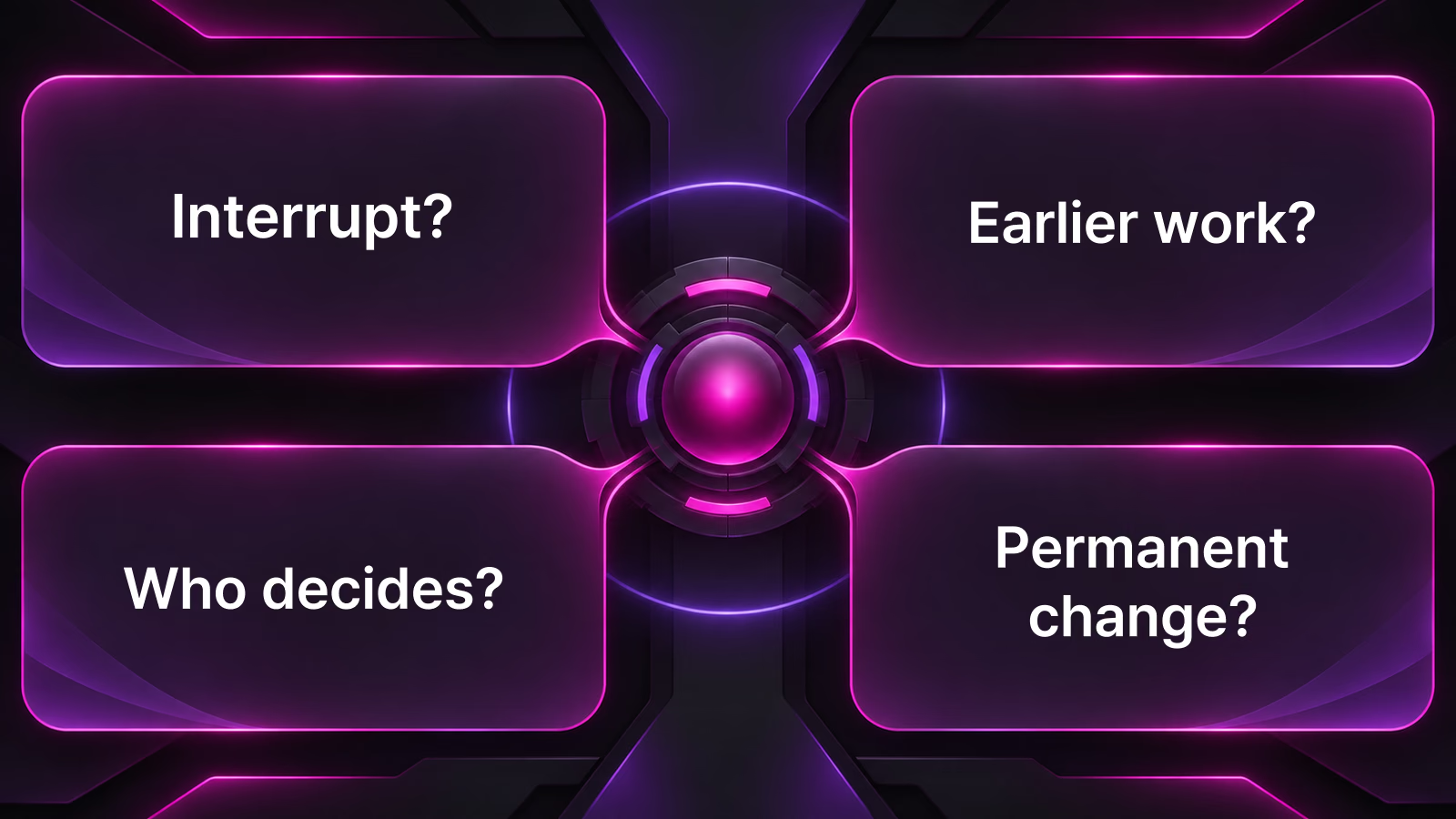
Can I interrupt an AI Worker while it is working?
That depends on its actual setup and the action in progress. Agree which instruction route to use, when a new message is read and what can stop. Have the behavior demonstrated during the pilot rather than assume that a visible chat message reaches every running action immediately.
Does giving it a new task cancel the old one?
Do not assume so. Say whether the earlier work should continue later, remain on hold or end, and check the resulting status. Steps already completed may still have effects, even when the remaining work is stopped.
Can anyone on my team change its priorities?
Only within the authority you have agreed for the job. Supplying information, requesting a change and deciding the order of work can belong to different people. Establish how incompatible directions reach the responsible decision-maker.
Does a one-off instruction change its permanent rules?
It should not be treated as a permanent rule merely because it appeared in a conversation. Make the intended duration explicit. A lasting change needs to reach whoever maintains the setup and go through the review and testing appropriate to what it changes.
Evidence note: This article draws on occupational and governance guidance, published agent documentation, research on simulated web agents and reported user experiences. Technical behavior varies by implementation, and the research and discussions are largely about developer tools. They do not demonstrate how a particular Taurist Worker performs. Taurist's use of a guardrail test matrix is described here from its owner's account of the process; the underlying matrix and test results were not independently inspected. The client-packet example is fictional.
Explore your AI Action Plan