Notes / Conversion Works
How to improve a low-traffic store without overstating the results
Match the evidence to the decision: verify a failure before repairing it, observe realistic tasks to investigate confusion, and assess experiment feasibility before claiming sales lift.
By Edu Rigonato. Published Oct 1, 2026. 10 min read.
A shopper cannot complete checkout. Another cannot find the information they need to choose a product. Your team wants to know whether a redesigned product page will generate more revenue.
All three situations deserve attention. They ask different questions, though, and the evidence that answers the first will not necessarily answer the third.
For a store with limited traffic, that distinction matters. Waiting for a purchase experiment before addressing every problem can leave useful work stalled. Shipping a change and calling the next sales increase a proven win creates a different problem: the team starts making decisions from claims the evidence never established.
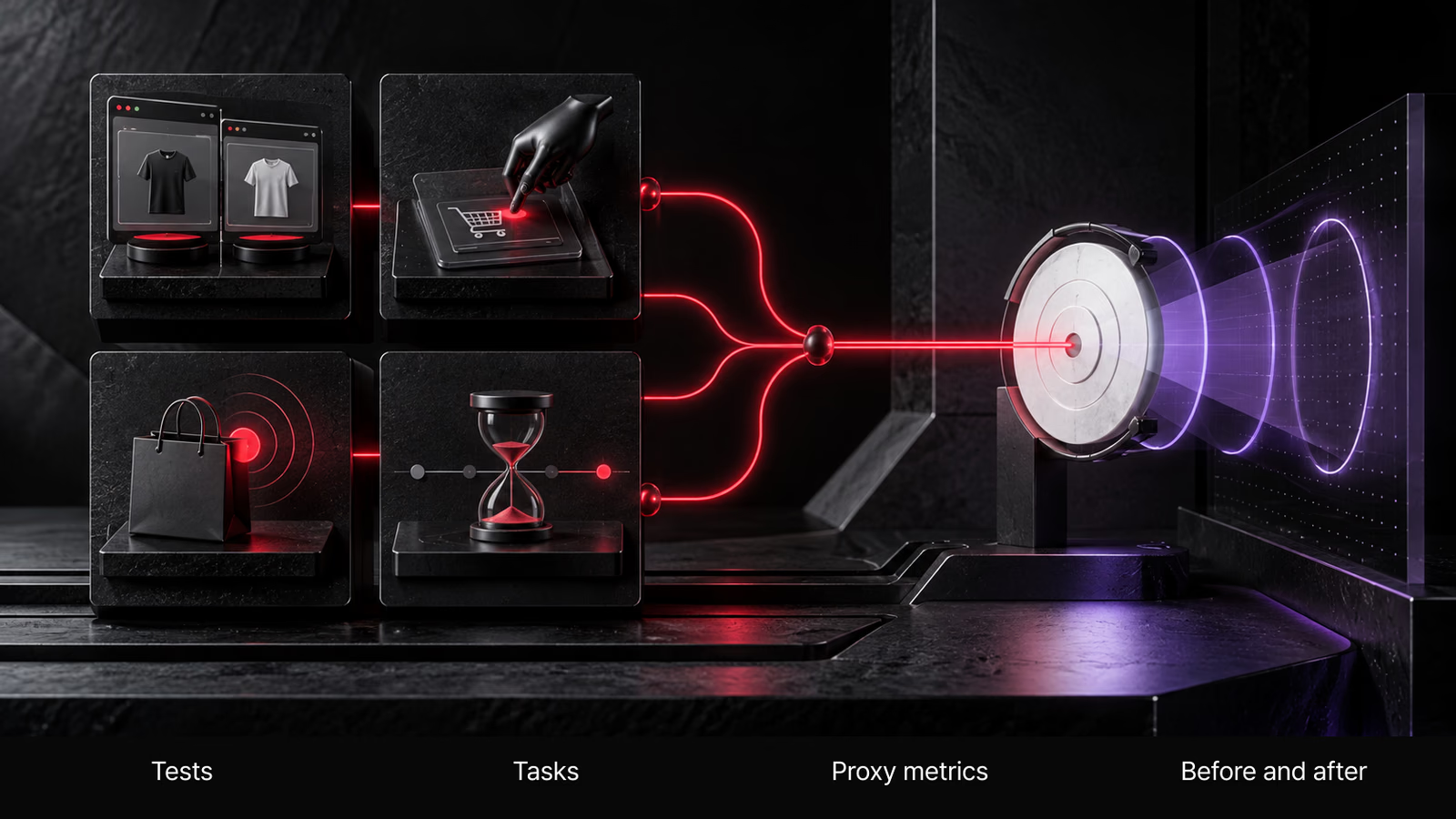
The practical approach is to match the method to the decision. Reproduce a failure to justify a repair. Observe realistic shopping tasks to investigate confusion. Plan an experiment around the commercial effect you need to detect before promising a sales-lift result.
You can improve the experience while keeping the strength of your conclusions clear.
What decision are you trying to make?
Start by writing the question in language that describes the uncertainty. “Improve conversion” is a goal. “Can a shopper choose the correct size without leaving the product page?” is a question you can investigate.
Qualitative and quantitative research answer different kinds of questions . Observing a shopper can help explain how a confusing interaction happens. Measuring an outcome across an appropriate sample can help estimate how often something happens or whether an intervention changes that outcome. Neither method automatically supplies everything the other provides.
Frequently asked questions
Can a low-traffic store run an A/B test?
Sometimes. Assess eligible exposure, the primary outcome, its variability, and the effect that would change your decision. Low traffic makes some questions difficult to resolve, but a universal traffic cutoff does not establish feasibility for your specific design.
Do five usability participants prove a change will improve conversion?
No. A small qualitative study can uncover obstacles in the tasks observed. It does not measure purchase lift or establish how often every shopper encounters the same problem. Participant selection and the study question matter.
Can I use add-to-cart clicks instead of purchases?
You can investigate add-to-cart behavior if that is the defined question. Treat it as a distinct outcome. A positive result on that event does not automatically establish more purchases, revenue, or profit.
Is a sales increase after a redesign evidence that the redesign worked?
It is an observation worth examining. By itself, it does not separate the redesign from other changes. Describe it as a monitored trend unless a suitable causal analysis supports a stronger conclusion.
Explore Conversion Works