Notes / Conversion Works
Does your product bundle solve a customer problem—or just add more products?
Build useful product bundles around customer needs. Compare kits, quantity packs and add-ons, then check contribution, inventory and returns before scaling.
By Edu Rigonato. Published Oct 2, 2026. 12 min read.
A starter kit includes the main product, the accessory that makes it usable, and something extra from the stockroom. The team sees a more complete offer. A shopper may see an item they already own, a choice they cannot change, or a higher price for something they did not need.
Choose a product bundle by defining the customer task, checking the role of each component, and comparing a costed offer with the alternatives shoppers can buy. That process gives you a candidate to evaluate; it cannot predict a lift.
A bundle brings several decisions into one purchase. Whether that helps depends on what the customer wants to accomplish, which alternatives remain available, and what the order contributes after its costs. This guide gives you a way to inspect those decisions before committing more inventory or traffic to the offer.
Choose the customer job before the bundle contents
Start with a specific situation: who is buying, what are they trying to do, and what would stop them using the main product successfully? “Increase average order value” describes the merchant's goal. It does not explain why these products belong together for the buyer.
Consider a hypothetical home-coffee starter kit. A brewer and filters might help someone make their first cup. A storage jar might be useful later. A branded mug might appeal to someone buying a gift, while adding little for a customer with a cupboard full of mugs. The same assortment can fit one situation and feel padded in another.
Write a sentence for each component: “This item helps this customer do this part of the task.” If the sentence depends mainly on having excess stock, treat that as a merchant constraint to investigate. It is not yet a customer reason to include the item.
For a first pass, classify the proposed contents:
Frequently asked questions
How do I decide which products to bundle?
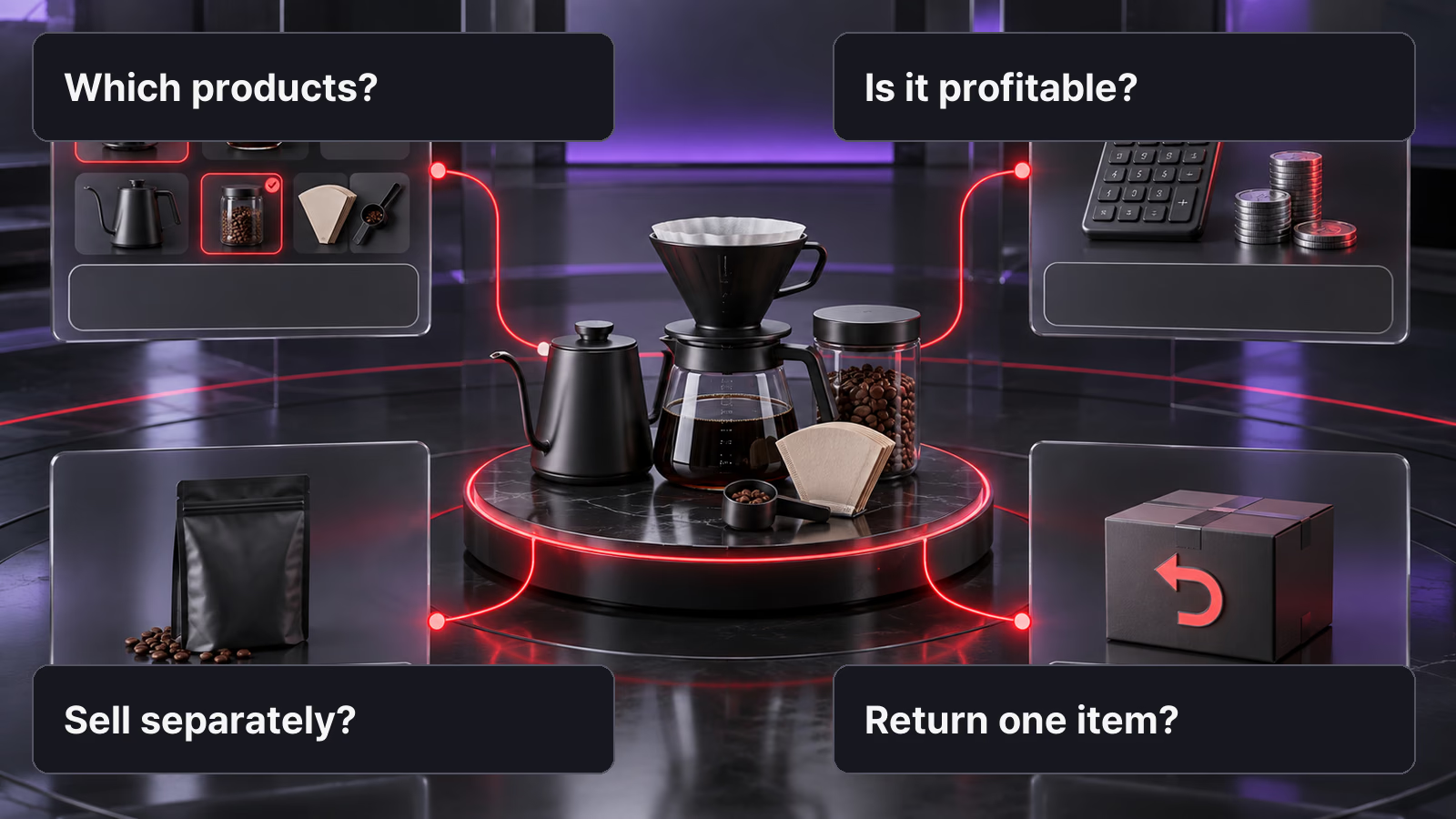
Start with the task the customer is trying to complete. Explain the role of each component, check what the buyer may already own, and review customer questions and purchase patterns. Products bought together are candidates to investigate; that pattern alone does not establish that a fixed bundle will be useful. Remove or make optional items whose value depends on preferences the bundle cannot accommodate.
How do I know whether a bundle is profitable?
Subtract the relevant product, discount, fulfillment, payment and return costs from what you collect. Use the same cost definitions for the bundle and its alternative. Then examine whether the bundle creates additional contribution or discounts purchases that would have happened anyway. Higher order value and positive contribution on a bundle order are both insufficient to establish incremental profit.
Should I still sell the products separately?
Consider whether shoppers need all the components and whether individual orders are economically viable. Standalone products give someone who already owns an accessory a way to buy what they need. A quantity pack or fixed kit may suit a different task. Compare the actual offers and their costs; the evidence does not establish one availability rule for every store.
Can customers return one item from a Shopify bundle?
Shopify's documented bundle behavior uses the return eligibility of individual component products, which appear as line items in return workflows. Check the customer's order, your return policy and the mechanism your app uses. Do not assume the bundle can have a separate final-sale setting or that an exchange behaves like a return. <a class="inl" href="https://help.shopify.com/en/manual/products/bundles/eligibility-and-considerations">Shopify's bundle considerations</a> explain the native constraints.
Evidence note: This guide draws on experimental research about bundle evaluation and official Shopify documentation about bundle mechanics and reports. The experiments use particular products or contexts and do not establish a sales or profit outcome for your store. The coffee kit and dollar calculations are hypothetical decision examples. Customer questions inform the practical focus; they are not representative demand estimates. No universal discount, conversion lift or optimal bundle size is established here.
Explore Conversion Works