Notes / Workers
Who owns the work behind an insurance RFP response?
A guide for agency principals carrying the requirements, people and decisions behind a formal brokerage bid.
By Edu Rigonato. Published Nov 10, 2026. 11 min read.
Consider a hypothetical bid at your agency. You have nearly finished a response to a request for proposals, or RFP. The service approach is drafted. Your proposed team is named. The reference section looks ready.
Then the buyer issues an addendum: a formal update to the instructions. Each reference must now identify comparable public-sector work. The references in your draft describe commercial clients without addressing that requirement.
Someone now has to work out which answers are affected, obtain the right material, have it checked and bring the revised package back for approval. If that person is still you, handing off the writing has left a substantial part of the job on your desk.
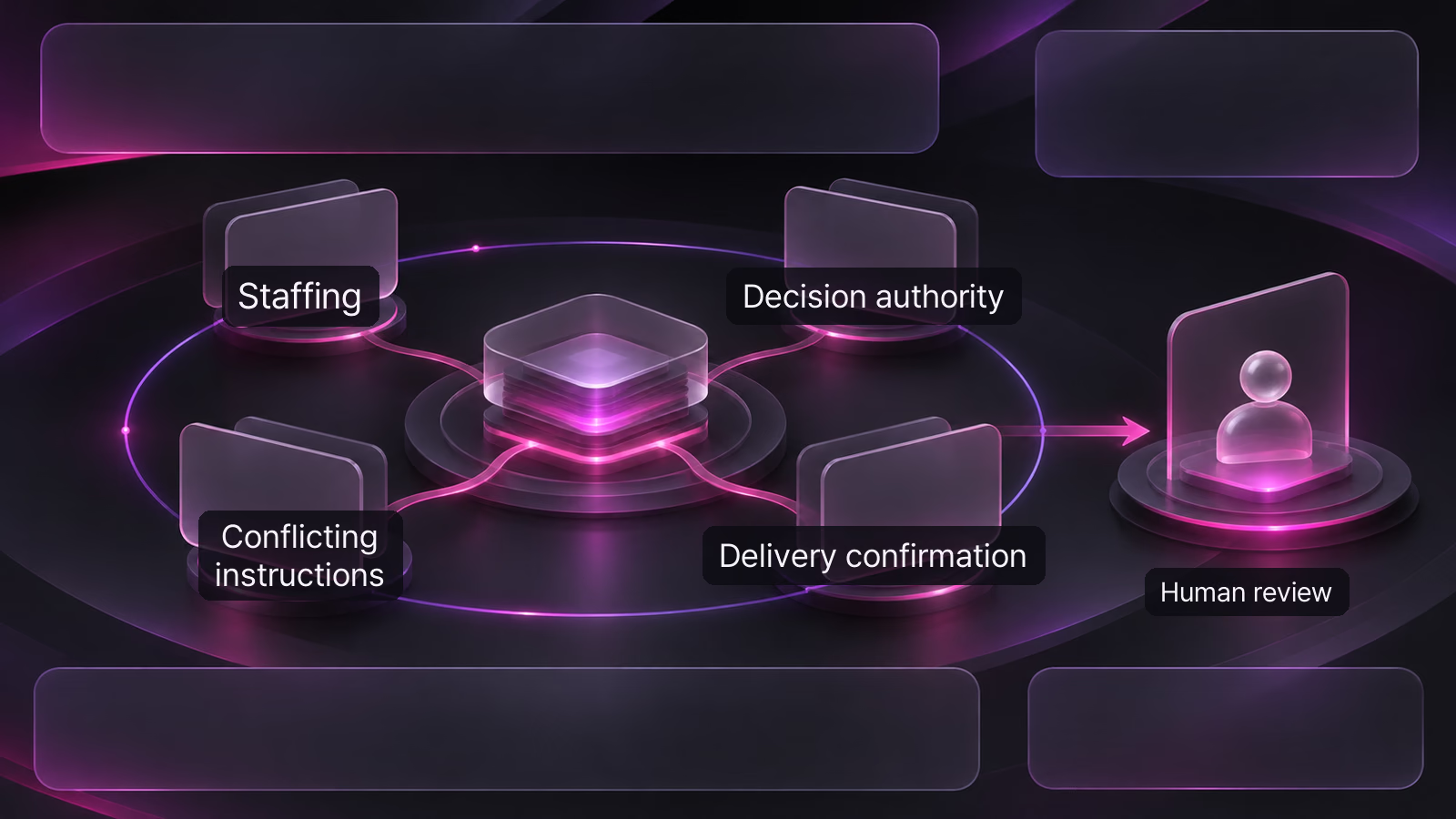
A named response owner should carry the requirements, contributors, evidence and changes through to an approved human submission and recorded receipt. That owner might be someone already on your team, a bid specialist or, where the job and tools support it, a managed AI Worker. Your agency's authorized people still make the insurance, eligibility and commercial decisions.
The useful question is what this owner takes responsibility for when the response stops following the original plan.
Is this RFP buying brokerage services, coverage or something else?
Start with what the buyer is asking your agency to provide. That determines which experience, people, permissions and evidence matter.
An RFP to appoint an insurance broker is different from a request for an insurance quotation. Some procurements also have several stages. Durham's insurance brokerage clarification distinguishes procuring brokerage services from procuring coverage. NJEFA's broker procurement separates broker qualification and market assignment from later insurance proposals. Neither describes every insurance opportunity.
Frequently asked questions
Does every insurance agency need a dedicated RFP coordinator?
No. An agency handling occasional, straightforward responses may assign the responsibility to an existing team member. Consider the work involved, the expertise available and how often the principal has to recover stalled tasks. The job needs an owner; that does not automatically require a new hire or a Worker.
Can an AI Worker decide whether we qualify or set our proposed fees?
Those decisions remain with your agency's authorized people. A proposed Worker could assemble current information, prepare comparisons and identify missing material within an agreed scope. It should not infer that missing evidence proves eligibility or turn a draft fee into an approved commitment.
What if the current instructions appear to conflict?
Preserve the exact passages and follow the solicitation's stated precedence and question process. Put the unresolved issue before the appropriate reviewer. Do not assume that a rule from a previous bid applies or let an AI system quietly select the interpretation most convenient to the response.
What should happen if the submission cannot be confirmed?
Retain the available delivery evidence and make the uncertainty visible to the authorized person immediately. Follow the buyer's allowed process for resolving it. Do not mark the bid received because a file was prepared, an upload was attempted or a person intended to submit it.
Evidence note: This article uses public insurance brokerage solicitations, a historical response and agreement-approval record, and professional bid-management guidance. Each procurement has its own rules. The agency scenario is hypothetical; the public records do not establish its internal process, Taurist client results or measured AI performance. Vendor capability descriptions are not comparative outcome evidence.
Explore Your AI Action Plan