Notes / Workers
The purchase order is sent. Who owns the order until it is complete?
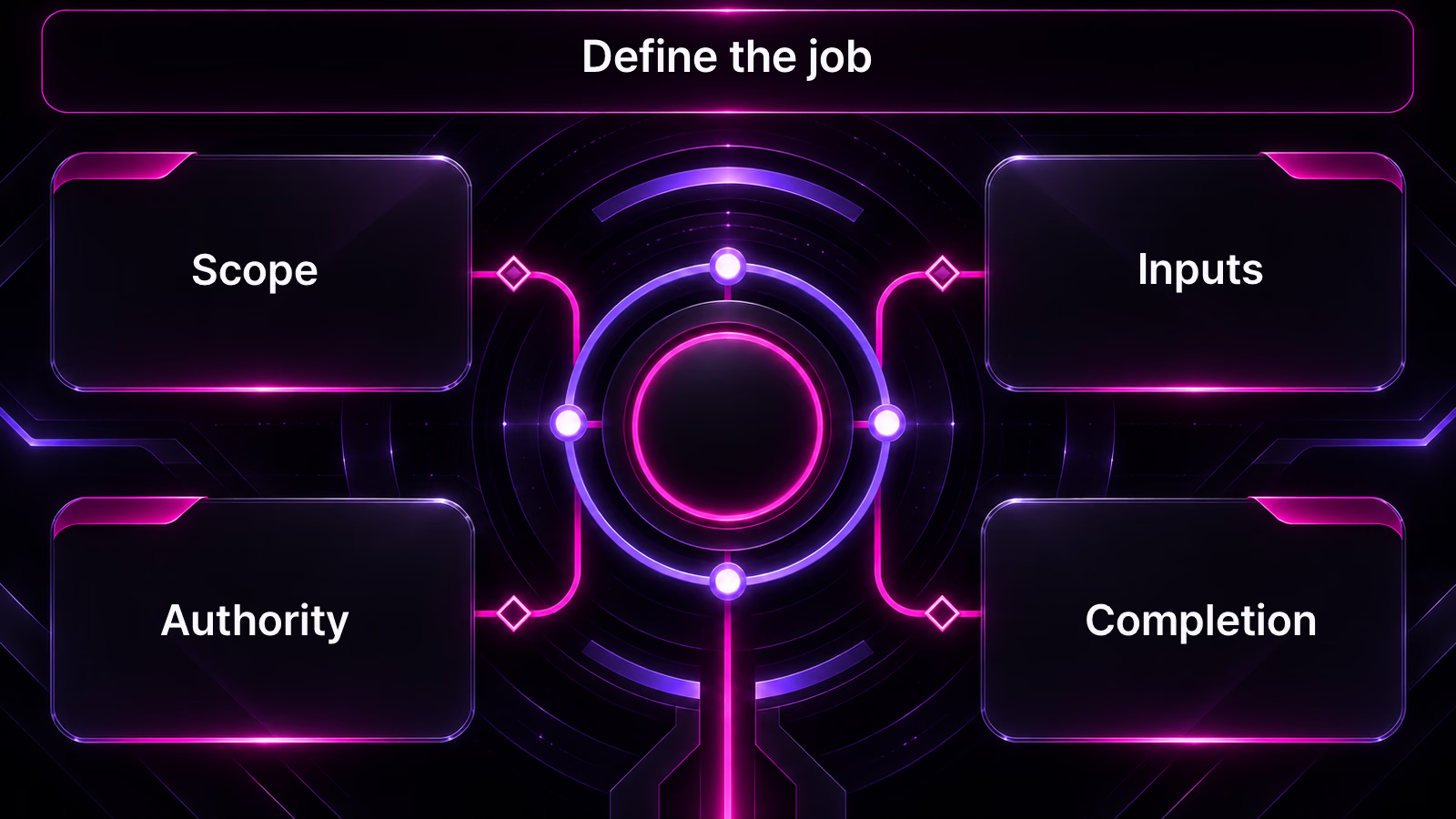
A purchase order needs an owner after it is sent. Define the responsibility through supplier changes, receiving and resolution before assessing an AI Worker.
By Rich Hill III. Published Nov 4, 2026. 11 min read.
A purchase order can be easy to find and still be hard to finish.
Consider a simple example: you order 12 units. Eight arrive. The supplier says the other four will come later, but the date in your purchasing system still reflects the original order. Someone on your team needs those four units for work already planned.
Nothing about the situation is hidden. The PO, the email and the receiving record all exist. The missing piece is someone carrying the order forward: reconciling what changed, working out what it affects, taking the next permitted action and checking the result.
That continuing responsibility is the job. It starts with an approved order and runs until the goods and any discrepancies have been accounted for, or an authorized alternative has been completed. A managed AI Worker could own the coordination if it has the necessary context, access and authority. People still provide physical receiving evidence and make the commercial decisions reserved for them.
The useful question is where your orders lose that ownership—and whether adding a Worker would address the cause.
What still needs an owner after a purchase order is sent?
The first task is establishing what the supplier has actually accepted. An acknowledgement may confirm the order, change a delivery date, split a quantity or reveal a disagreement. Someone needs to compare it with the approved PO and deal with the difference.
This work belongs to a recognizable purchasing role. O*NET's description of procurement clerks includes tracking orders, contacting suppliers about shortages and late deliveries, checking shipments and resolving purchasing discrepancies. The description connects the follow-through to the records; it does not stop at entering an order.
Frequently asked questions
Does this include choosing suppliers and negotiating prices?
Not in the job described here. It starts with an approved PO. Sourcing, negotiation and buying decisions would need their own scope and authority. The order owner can bring a supplier problem to the person responsible without assuming those powers.
Can we start with one supplier or one type of order?
Yes. Start with a repeatable group of orders and include exceptions such as a partial receipt or changed date. Before expanding, check that both ordinary and exception orders reach the agreed finish, and review how much work still falls to your team.
What if a supplier only gives updates by phone?
The job needs a reliable record of those updates. Decide who captures the conversation, what must be confirmed and where the information belongs. Do not assume phone access, recording permission or a supported calling capability. Missing information remains a limitation until there is an agreed way to obtain it.
How would we judge whether the arrangement is helping?
Review similar orders before and during a trial—for example, orders of the same type from the same supplier. Look at unresolved orders without a next action, time spent chasing, missed discrepancies and decisions waiting on people. Track supplier delivery time separately from coordination effort. Agree on the measures and review period; no particular improvement is guaranteed.
Evidence note: This article draws on occupational descriptions, published purchasing and receiving guidance, and qualitative practitioner accounts. Those sources help define the work; they do not establish AI effectiveness or the prevalence of the problem. The 12-unit order is illustrative. The suggested responsibility and completion criteria are editorial guidance to assess against a business's own rules.
Explore Workers