Read and organize
Defined workflow action
Review incoming forms, messages, files, or records and organize the context the workflow needs.
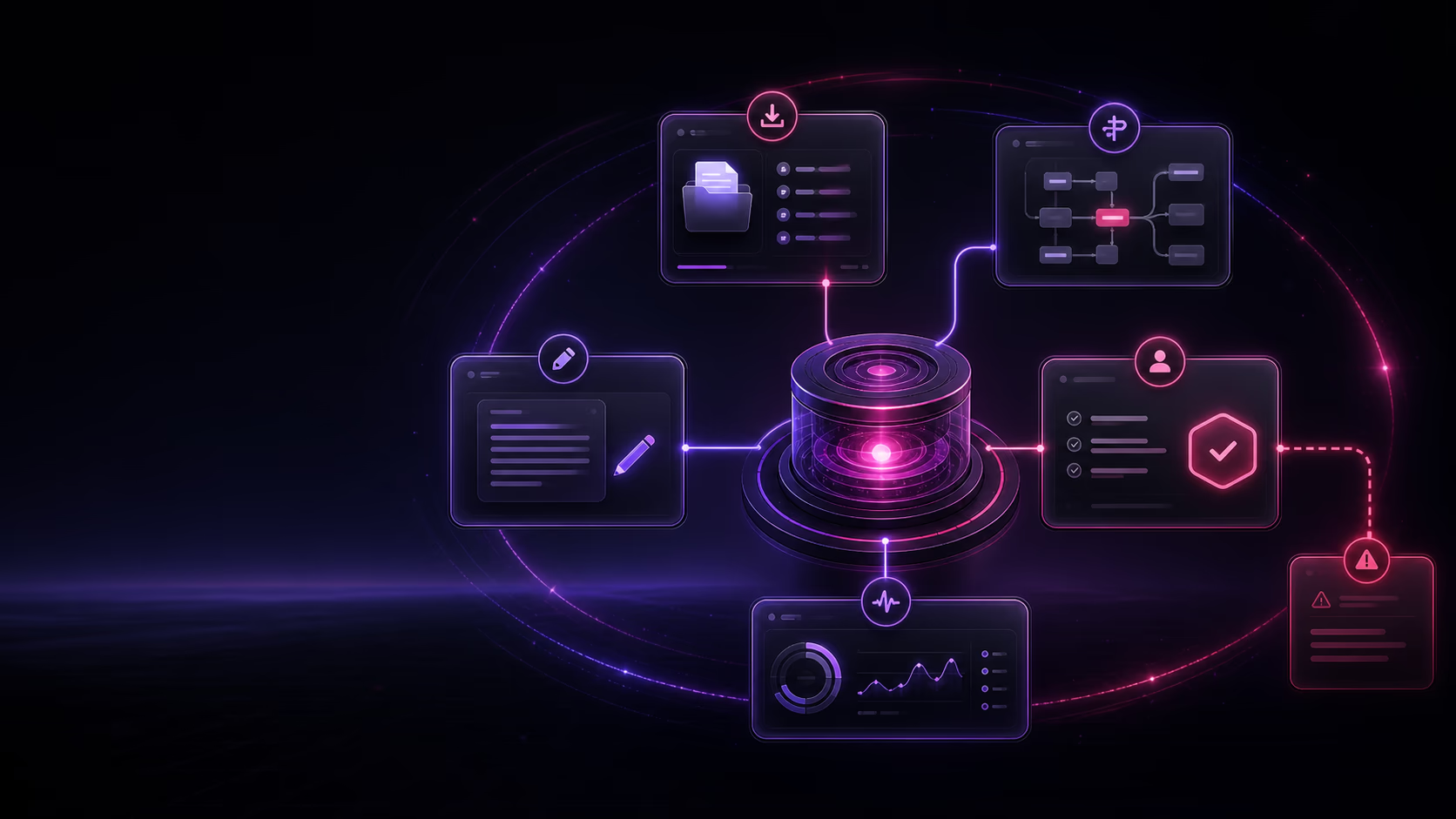
A managed AI worker can handle defined recurring workflows: reading inputs, preparing drafts, organizing context, routing requests, updating bounded records, and queuing work for approval.
A Worker handles one workflow, not an entire human role.

The best small-business AI worker is not a vague digital employee. It is a managed system built around one recurring workflow with a recognizable trigger, known inputs, a clear owner, and a reviewable definition of done.
Taurist maps what the worker may read, draft, route, update, or queue; what needs human approval; and what must stop and escalate. The worker is then monitored and maintained as the workflow changes.
The useful question is not whether AI can do everything. It is which repeated steps can move reliably while your team keeps judgment and approval.
Defined workflow action
Review incoming forms, messages, files, or records and organize the context the workflow needs.
Defined workflow action
Prepare replies, summaries, reminders, reports, or next-step options for a person to review.
Defined workflow action
Send a request to the right queue, owner, or approval step using the rules your team defines.
Defined workflow action
Keep agreed fields, task states, or recurring records current when the source and rule are clear.
Defined workflow action
Prepare or trigger a defined reminder when an input, response, appointment, or payment is still missing.
Defined workflow action
Stop when work is sensitive, unusual, missing context, or outside the map and bring it to a person.
Useful AI work needs an operating owner, not just a setup. The workflow map keeps human judgment visible and gives unclear work somewhere to go.
Someone inside the business can explain the rules, judge exceptions, and confirm what done means.
The map names what the worker may read, draft, route, update, or queue—and what must wait.
Missing context, sensitive decisions, and exceptions go to the workflow owner instead of moving forward.
Taurist watches the worker path and maintains it as the workflow, systems, and business rules change.
These are illustrative workflow categories, not fixed templates, customer case studies, integration claims, or promised outcomes.
Illustrative recurring workflow
Check a new intake for missing details, prepare the follow-up, and queue anything sensitive for review.
Illustrative recurring workflow
Organize an incoming request, apply defined routing rules, and send exceptions to the right owner.
Illustrative recurring workflow
Gather the review context and prepare a response for a person to approve, edit, or decline.
Illustrative recurring workflow
Prepare agreed reminders from the schedule and flag unusual changes or missing information.
Illustrative recurring workflow
Identify incomplete or inconsistent records and queue clearly bounded updates for review.
Illustrative recurring workflow
Surface overdue items and prepare a reminder while payment decisions and exceptions stay human-owned.
Illustrative recurring workflow
Gather known inputs, prepare a recurring status summary, and flag missing or conflicting data.
Illustrative recurring workflow
Organize submitted information, apply agreed qualification rules, and route the lead for review.
Illustrative recurring workflow
Classify incoming requests, assemble useful context, and escalate sensitive or unclear issues.
Illustrative recurring workflow
Track expected inputs, prepare the next reminder, and route stalled requests to the process owner.
See more AI worker examples with triggers, owners, approvals, and escalation paths.
Not every useful business activity should become the first worker. Map the process before deciding how much of it should move.
Use the first AI worker readiness check to review one process in more detail.

Taurist starts with how the work runs today, then defines the worker around an approved map instead of forcing a generic agent into the business.
Start with work that keeps returning, not a vague role or broad AI transformation goal.
Name the trigger, inputs, steps, systems, decisions, exceptions, owner, and definition of done.
Agree on what the worker may prepare or update, what requires approval, and what must escalate.
Taurist turns the defined workflow into a managed worker with readable, reviewable outputs.
Keep the worker aligned as the workflow, tools, information, and business rules change.
Start with the recurring work, then define the owner, boundary, approval points, and maintenance path.
Map one repeated process and see what a worker could prepare, route, update, queue, or escalate.
An AI worker is a managed system built around one defined recurring workflow. It can read inputs, prepare drafts, organize context, route requests, update bounded records, or queue work for approval while people retain judgment and required approvals.
No. A chatbot primarily responds inside a conversation. A managed AI worker is mapped around a workflow: what starts the work, what information it uses, what it may prepare or update, what needs approval, and when it must escalate.
Start with recurring work that has a recognizable trigger, a clear owner, known inputs, reviewable outputs, and approval points your team can explain. Intake follow-up, request routing, CRM cleanup, invoice follow-up, internal reporting, and review response preparation are common examples.
Only within the boundaries defined for that workflow. A worker may complete low-risk, routine steps when the rules are clear. Sensitive, unusual, or unclear work should pause for approval or escalate to a person.
Taurist monitors and maintains the worker as the mapped workflow changes. Your business keeps a process owner, maintains its source information and business rules, and retains judgment and approvals wherever the workflow requires them.
No. You need a recurring workflow or operational bottleneck you can describe. Taurist maps its trigger, inputs, systems, decisions, exceptions, owner, and definition of done before defining what a worker should handle.
Map the trigger, owner, inputs, systems, expected output, approval points, and exceptions before anything is built.