It is a short record of a material operating change: what changed, which work is affected, who decided the next step and when the team will review it. It keeps a recurring job understandable as its rules and context evolve.
 Keep changes reviewable
How to keep an AI worker decision log.
When a recurring job changes, record what changed, who decides and what must remain in place. Use the assessment below to examine one change of priority, including unfinished work and the checks needed before you treat the change as settled.
A decision log makes a change visible; it is not approval to expand a Worker's responsibility.
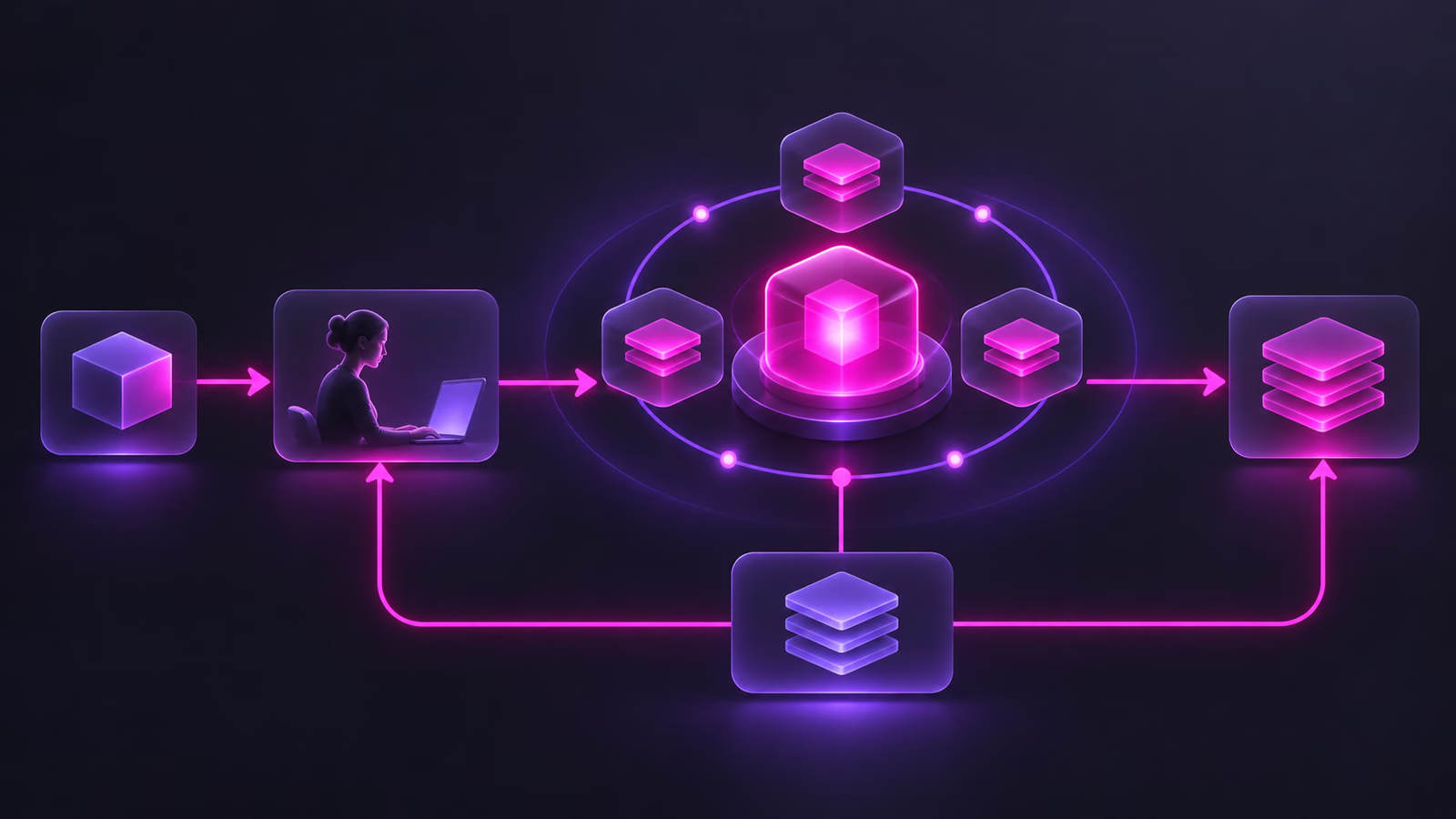
Keep the decision trail attached to the job.
A useful log explains why the normal path changed, who owns the next decision and what evidence will be checked afterward. It keeps the new direction connected to the work it affects.
It is a planning and review tool—not a claim that a process is safe, compliant, approved or ready to run without human judgment.
Public guidance
Why changes need context, oversight and review
These sources describe general AI risk management, change context, human oversight and evaluation. They do not evaluate or endorse Workers.
Use them to frame an internal process; confirm your own requirements and responsibilities.
- NIST — AI Risk Management Framework Core: General guidance organized around Govern, Map, Measure and Manage.
- NIST — Generative AI Profile: Companion guidance for managing generative-AI risks.
- OpenAI — A practical guide to building agents: General guidance on workflows, guardrails and evaluation.
Use one record to review a material operating change.
The goal is not paperwork. It is to make a changed operating assumption clear enough for the responsible person to review.
1. Name the changed condition
Record the policy, tool, input, owner or exception that no longer matches the working assumptions. Say whether the request applies once, lasts for a stated period or changes a standing rule.
Write down: The previous rule or plan, the changed condition and how long the direction should apply.
2. Review the affected path
Identify the work that may be affected and any action that needs to wait under the agreed rules. Distinguish work that can continue from a decision that needs clarification. Do not assume a new message stops an action already underway.
Write down: What continues, what should wait, what has already happened and who resolves any uncertainty.
3. Make one reviewable decision
State the authorized next action, the accountable person, the evidence considered and any condition that still needs testing. A request does not grant new access or remove an approval requirement.
Write down: The named owner, decision, unchanged rules and required review or tests.
4. Revisit the record
Set a review point so the team can confirm whether the change held, needs another adjustment or should be removed. For temporary direction, make the return to the standing plan explicit.
Write down: The review point, the evidence to inspect and who decides what happens next.
Assess one change before you rely on it.
Use one actual example. Replace client names and sensitive details with references you can discuss safely. Copy the headings into your own working document; this page does not collect or save your answers.
An everyday instruction can stay lightweight. A lasting change to a rule, source of truth, permission or accountable owner needs the review appropriate to that change. The same questions can expose a gap in either case.
Start with the old plan and the new direction
| Record | What to write |
|---|---|
| Job and reference | Which ongoing responsibility and specific work does this affect? |
| Current commitments | What is due, to whom and when? What has started, finished or not started? |
| Requested change | What should be different: order, result, timing, responsibility or standing rule? |
| Duration | Is this once, until a stated point or a permanent proposal? |
| Authority | Who requested it? Who can decide this priority and resolve a disagreement? |
| Instruction route | Where should the direction go? When can the Worker act on it? Mark an unconfirmed answer as unknown. |
| Boundaries that stay | Which reviews, permissions, standards and other commitments remain in force? |
| Open decision | What must a person clarify before the affected action can change? |
Keep displaced work on the plan
Use one row for each affected item. Moving something down the list does not mean it no longer matters.
| Work item | Current state | Agreed next treatment | Commitment and owner | Evidence or question |
|---|---|---|---|---|
| Item reference | Not started / underway / completed / unknown | Continue / wait / end / seek a decision | Existing or agreed revised date; responsible person | What confirms the state, or what still needs checking? |
If an action already happened, record its effect separately. Stopping later work does not undo a sent message, an external update or a commitment. Have the responsible person assess what needs attention.
Write down what must keep working
A change needs more than a check that the new behavior happens. Consider the rules and connected work that should remain unchanged.
At Taurist, we use a guardrail test matrix when assessing changes to a Worker. The person maintaining the setup considers the requested change alongside the rules and behavior that must remain in place. The owner helps judge whether the proposed checks reflect the real job.
The table below is a planning aid for that conversation. It is not Taurist's internal matrix, a test result or a complete list of every possible effect. Which checks need to run depends on the change and what it could affect. Routine redirection within agreed rules does not automatically require a rebuild.
| Rule or commitment | Requested behavior | What must stay the same | Scenario to test | Evidence needed | Reviewer | Observed result |
|---|---|---|---|---|---|---|
| Name the affected rule | Describe the change | Describe the unchanged requirement | State a concrete situation | Specify what someone should inspect | Name the responsible reviewer | Not yet tested / observed result with evidence |
The maintainer selects and runs the technical checks. The business owner and relevant reviewers assess the effect on commitments, decisions and acceptable work. A written row is a requirement to examine, not proof that the Worker implements it.
For broader evaluation, use How to evaluate an AI Worker before live work.
Worked example: bring Packet A forward without losing B and C.
This is a fictional planning example. No Worker was run and no result is claimed.
An owner has three client review packets in progress. At 9:20, the owner wants A prepared for review before lunch. B and C are still needed tomorrow. A colleague wants the original order kept. The owner must resolve that disagreement before the team treats either direction as final.
The completed change record
| Record | Example entry |
|---|---|
| Job and reference | Prepare and coordinate client review packets A, B and C. |
| Current plan | All three packets are needed tomorrow. A's material is gathered; preparation and review are unfinished. B is waiting for requested information. C has not started. |
| New direction | Bring A forward for review before lunch today. Keep B and C on tomorrow's plan with the same required checks. |
| Duration | One change for these packets. No permanent client-priority rule is proposed. |
| Authority | The owner can set this order. The colleague's preference is referred to the owner, who confirms A first and B/C tomorrow. Any conflicting external commitment still needs the owner's decision. |
| Instruction route and timing | Use the agreed instruction route. When this setup can act on the message is not yet confirmed. The maintainer must clarify that timing. |
| Unchanged boundaries | Required review still applies. Access and decision-making permissions are unchanged. Missing-information requests remain attached to their packets. |
| Open question | Can A be prepared and reviewed before lunch without breaking another commitment? Receipt of a message alone cannot answer this. |
Where the other work goes
| Packet | Starting state | Intended next treatment | Commitment | What remains to inspect |
|---|---|---|---|---|
| A | Material gathered; preparation/review unfinished | Bring forward after the authorized direction can be acted on | Before-lunch review target, subject to feasibility | Actual instruction timing, remaining preparation and required review |
| B | Waiting for requested information | Keep request attached; continue when the needed information arrives | Tomorrow; owner retains any change decision | Information received and remaining time; no repeat request assumed |
| C | Not started | Keep visible on the current plan | Tomorrow; owner retains any change decision | Whether A's revised order leaves enough time |
These are intended treatments, not observed updates. If the timing does not work, return the conflict to the owner rather than quietly change B or C's commitment.
Three checks to plan with the maintainer
| Rule or commitment | Requested behavior | What must stay the same | Scenario to test | Evidence needed | Reviewer | Observed result |
|---|---|---|---|---|---|---|
| Packet order and due dates | A moves ahead | B and C remain visible with tomorrow's commitments | The new direction arrives while preparation is underway | Current plan showing each packet's state, order and commitment after the update | Owner with maintainer | Not yet tested |
| Required review | A is prepared earlier | Earlier timing does not bypass its required review | Preparation finishes near the earlier target | Review state and evidence that the result has not been treated as approved without the authorized review | Named reviewer with maintainer | Not yet tested |
| Conflicting directions | Apply the authorized order | A colleague's incompatible preference does not silently replace it | The original-order request appears after the owner's new direction | Conflict is visible and routed to the person authorized to decide | Owner with maintainer | Not yet tested |
The table does not prove that the system can interrupt a running action, meet the target or preserve every other rule. It gives the people responsible specific questions to test and evidence to inspect.
The decision is still open
The owner has clarified the desired order. Instruction timing and feasibility remain unresolved; no test results or completed packets have been observed. The next step is to clarify how the setup receives the direction, review the affected commitments and have the appropriate checks performed.
That is a useful assessment result: a named next action, rather than a false “all clear.”
Confirm what changed—and what did not.
Keep these states separate when you revisit the record:
- Received: There is evidence the direction reached the agreed route.
- Understood: The confirmed plan reflects the authorized instruction and its duration.
- Changed: The affected work and retained commitments show the agreed treatment.
- Checked: The actual result and relevant unchanged rules have been reviewed against the evidence selected for this change.
Evidence for one state does not establish the next. If something is unknown, record the question, the person who will answer it and when it will be reviewed. Do not turn a blank test result into a pass.
For temporary direction, record when it expires and how the team will confirm the return to the standing plan. Also note any work people had to repair: finding a forgotten item, correcting an old deadline or repeating the same instruction elsewhere.
Common decision-log questions
Bring one change of plan to your AI Action Plan.
Choose one anonymized example that kept coming back to you. We can examine how the direction reaches the job, what must stay with your people, what evidence you would need and which approach is worth testing.
The answer might be clearer responsibilities, better use of existing software, human coordination or a managed Worker. Consider the checking and repair effort as well as the work you hope to hand over.
Sources and limits
The assessment is our practical synthesis of general governance guidance, published agent documentation and research on changing instructions. Technical behavior depends on the actual setup. For examples of those boundaries, see NIST's governance guidance, research on interruptible web agents and the Model Context Protocol cancellation specification. Those sources do not establish that a particular Taurist Worker implements a control.
The description of Taurist's guardrail test matrix comes from its owner's account of the process; the underlying matrix and executed test results were not independently inspected for this page. The packet example and its test-planning rows are fictional and untested. This page offers no safety, compliance, performance or completeness guarantee.