Assess your nurse-applicant follow-up
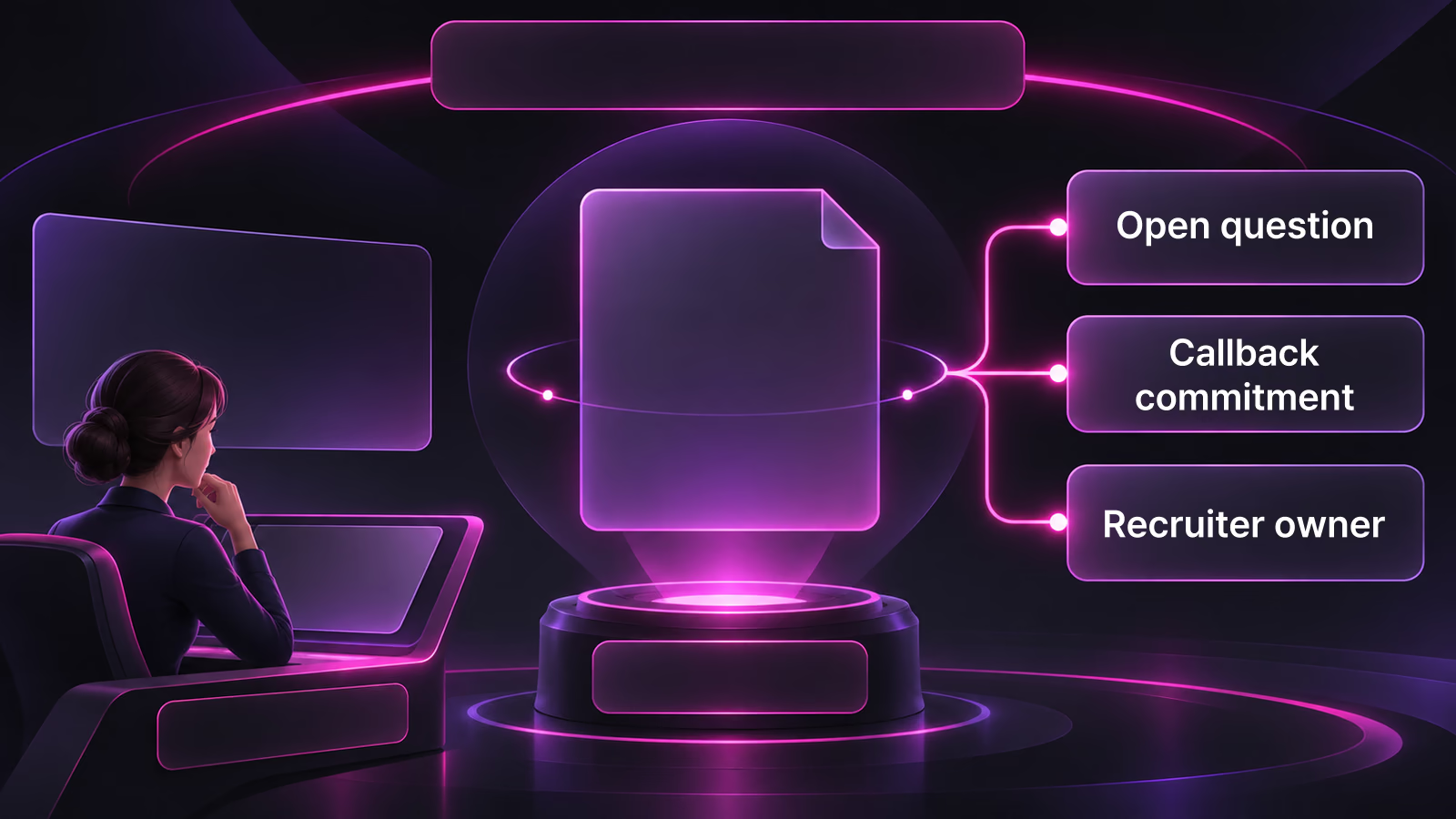
Choose one application that kept coming back to you. Use this assessment to find the unanswered question, callback or recruiting handoff behind the messages—and decide who should carry it forward.
The copy control copies the visible blank record only. Complete it in your own document; do not enter applicant information on this page.
This guide is for home-care agencies recruiting RNs and LPNs/LVNs. It checks the agency’s follow-through, not whether a nurse should be hired. You can use it without choosing AI.
Work in a document your agency already controls. This page does not ask you to enter, upload or submit applicant information. Use an anonymized account when discussing the finding outside your authorized team; names, résumés, license images and other personal records are not needed to explain the coordination problem.
Choose one application and the opening it belongs to
Pick a recent application whose conversation you can inspect appropriately. Begin with the opening the nurse actually applied for, rather than “our nurse recruitment” as a whole.
In your own record, identify:
- Application reference: enough to find the relevant conversation internally, without copying unnecessary personal information.
- Opening and current information: the nursing role, the source your recruiter uses for current job details and anything that has changed.
- Follow-up owner: who keeps the conversation moving when the nurse replies, asks a question or needs a different time to speak.
- Recruiter or decision owner: who answers questions that cannot be resolved from the approved opening information.
If the opening or its current details are unclear, write down that question first. A coordinator cannot give a reliable answer about shifts or service area by choosing whichever version is easiest to find.
Applicant contact, job information and recruiting records are among the human responsibilities described by O*NET. The assessment below is a practical way to examine those connections in your agency; it is not a prescribed recruiting form or an evaluation of AI capability.
Find the question or commitment that is still open
Look for the first point where someone needed an answer or had promised an action. It might be a question about the shift, a requested callback time or a conversation the recruiter was expected to arrange.
Complete one row for each relevant event. Keep the row concise; you do not need to copy the entire conversation.
| Event or commitment | What the record shows | What it does not establish | Who owes the next answer or action |
|---|---|---|---|
| Write the question, reply, promised callback or other event. | Identify the message or record and what it actually confirms. | Name the remaining uncertainty; use “not recorded” where needed. | Name the responsible person and the action they need to take. |
An acknowledgment establishes that a receipt was sent. A delivery record may show delivery through that channel; it does not show that the nurse read or understood the message. A booking entry does not establish attendance, suitability or a hire.
Likewise, a reply can leave a question open. “Can you tell me the service area before I book?” is not resolved by sending the calendar link again. Record the question and the person who can answer it.
Do not fill a gap with an interpretation of the applicant. “No reply recorded” describes what you know. “Not interested” adds a conclusion you may not have evidence for. Keep applicant-stated availability or contact preferences separate from assumptions about why someone has not responded.
Make the callback and recruiter responsibility specific
For the next conversation, check what has actually been agreed:
| Check | What to record |
|---|---|
| Answer needed | The job question or scheduling issue the next contact should resolve. |
| Person taking it forward | Who has agreed to answer, call or arrange the conversation. If not confirmed, say so. |
| Contact arrangement | The time or window and method that have been communicated or agreed, including the nurse’s stated availability. |
| Cover | Who handles it if the responsible person is unavailable. Write “needs agreement” if no arrangement exists. |
| Missed commitment | Who notices a missed promise and takes responsibility for the follow-through. |
| Human decision | Any question about screening, credentials, clinical suitability, pay, an offer or hiring that must go to an authorized person. |
Sending a record to recruiting does not, by itself, show that someone has accepted the callback. If the recruiter has not confirmed what they will do, that is the gap to resolve—not a reason to mark the application handled.
Use the contact policy your agency has approved. This assessment does not set a response-time target, contact frequency or number of attempts. If nobody can explain the arrangement, bring that decision to the appropriate person rather than invent it while completing the record.
There is an equally important distinction between collecting information and deciding what it means. NCSBN explains several reasons a license may not appear in a search. A missing result belongs with the authorized person who handles verification; it is not a rejection rule for the follow-up record. This guide does not prescribe credentialing steps or documents.
Worked example: a booking link leaves the shift question unanswered
Fictional example. The messages and actions below are invented to demonstrate the assessment. They are not a client record, a hiring result or a deployed Worker.
A nurse applies for an advertised role and asks about overnight shifts and service area before booking a conversation. An acknowledgment and a booking link are recorded. There is no recorded answer about the opening and no confirmed recruiter callback.
| Event or commitment | What the example record shows | What remains open | Next action and owner |
|---|---|---|---|
| Application acknowledged | A confirmation message was sent. | No substantive answer about the job is recorded. | The follow-up owner keeps the nurse’s question attached to the application. |
| Nurse asks about shifts and service area | The question is present in the conversation. | The current opening details still need confirmation from the recruiter. | The recruiter checks the approved role information and supplies the answer. |
| Booking link supplied | A link was sent. | No booking or agreement to speak is recorded. The question may still affect whether the nurse wants to book. | The follow-up owner uses the agreed process to get the answer back to the nurse; another link alone does not resolve it. |
| Recruiter callback | No accepted callback responsibility is recorded. | Who will contact the nurse, when and with what answer? | The agency names the receiving recruiter and establishes the contact arrangement and cover. |
Assessment finding: the missing step is not another acknowledgment. The job question and responsibility for the next conversation remain unresolved in this record.
What would change the finding? Suppose the recruiter checks the current opening, the nurse receives the shift and area information, and both agree a time to speak. The recruiter confirms they will make that call and the agency records who covers it if needed. Those entries support a clearer answer and callback arrangement. They do not establish that the call happened or that the nurse was hired.
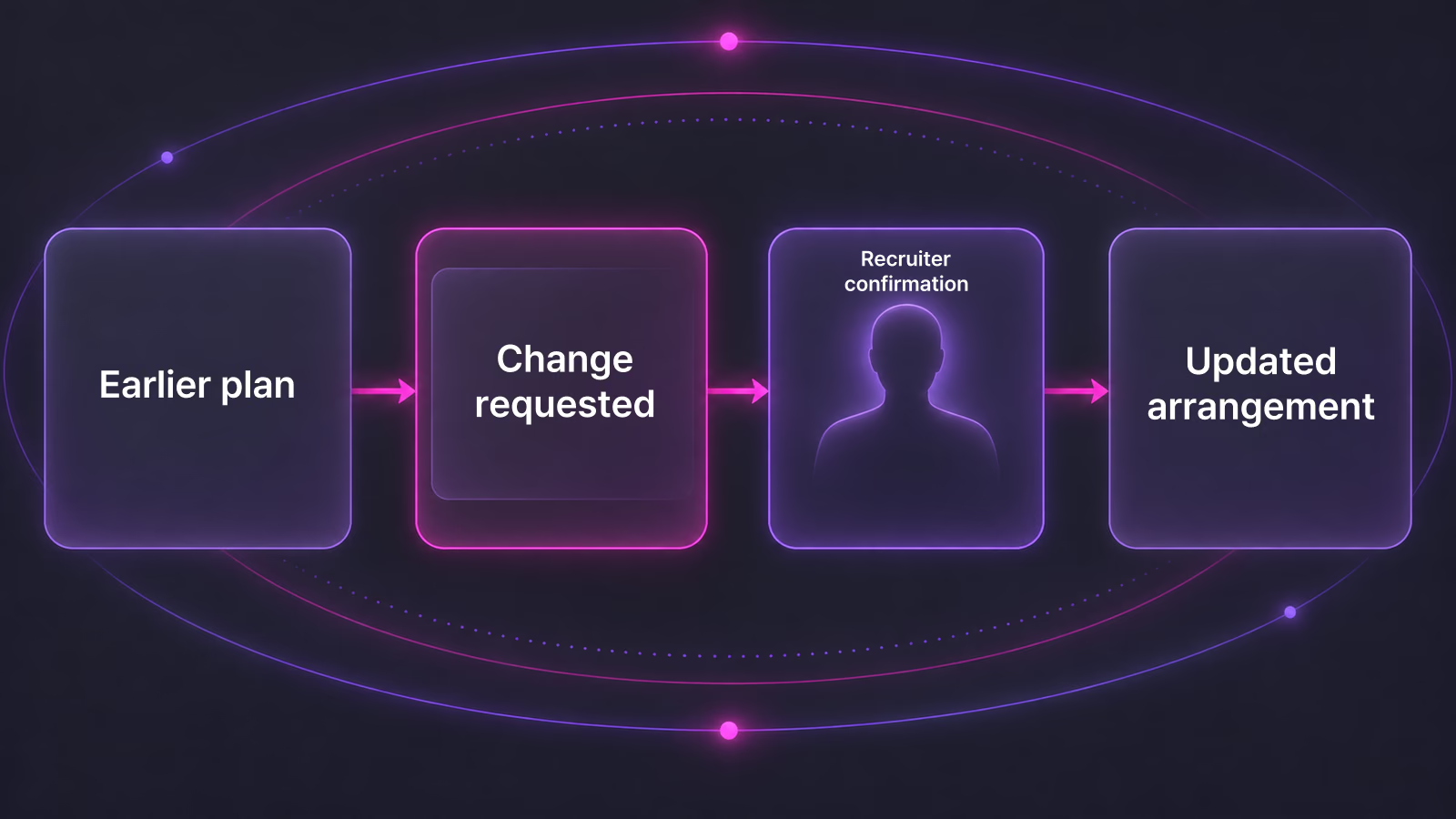
When the nurse asks for a different call time
Now suppose the nurse replies that the agreed time no longer works and asks to speak after a shift. Keep that reply attached to the same conversation. Identify the earlier appointment affected, who will confirm a replacement arrangement and who needs the update.
Until the change is confirmed, record a requested change—not a new appointment everyone has accepted. Once it is agreed, the relevant person should reconcile the old and new arrangements under the agency’s process so another colleague does not call using the superseded plan.
That small change tests whether someone is carrying the conversation or merely executing the original sequence. A later request, a changed opening or a request to stop contact can all require a different next action. Handle each under the agency’s policy, without treating a scheduling difficulty or silence as evidence of suitability.
Copy your assessment record
Copy the blank structure below into your own controlled document. It is a record of your agency’s follow-up, not a new applicant questionnaire. Leave out information the assessment does not need. Use “not recorded,” “not confirmed” or “needs agreement” instead of filling an empty field with a guess.
NURSE-APPLICANT FOLLOW-UP ASSESSMENT

Application reference in our own records:
Opening / current job-information source:
Agency follow-up owner:
Recruiter / person who can answer the job question:
Applicant-stated contact arrangement, if recorded:

ONE OPEN QUESTION OR COMMITMENT
Question / reply / promised callback:
Record supporting what happened:
What that record establishes:
What remains unknown or unanswered:
Next answer or action / responsible person:
Has that person accepted it? Evidence or uncertainty:
Contact arrangement communicated or agreed:
Cover / missed-commitment owner:
Human decision still needed / authorized person:

IF THE PLAN CHANGED
New request or changed opening information:
Earlier contact or appointment affected:
Who confirms the change:
What record or arrangement needs updating:
What is confirmed / what remains open:

AGENCY-PROCESS FINDING
Specific gap or supported finding:
What I had to reconnect or resolve personally:
Next action and owner:
What would show that action was carried through:
One change to examine with the team:
For example, the finding might be “the shift question still needs an answer,” “the reply has not reached its owner,” or “the recruiter has not confirmed the callback.” If the arrangement is supported by the records, say what supports it and retain any outstanding question. These are descriptions to help your team act, not required software statuses or a numeric score.
Decide which change would address the gap
Look at the intervention you personally made. Did it require your hiring judgment, or did you have to find a reply, locate the current job information and connect it to the recruiter?
A clearer assignment and cover arrangement may address unowned follow-through. Your existing applicant-tracking system may already support messaging, shared history or scheduling; Hireology advertises these functions, for example. Check what is actually available and configured in your system before adding something else.
Human recruiting support may be appropriate when substantive conversations and recruiting decisions dominate. A scoped Worker is an option to assess where there is continuing administrative work to carry, with established information, actual access, permitted actions and a person to report to. A proposed connection or job description is not proof it can perform that work reliably.
For a small test, inspect whether the promised answer or call happens, whether replies and changes reach the right person, and how much owner/recruiter checking or correction remains. Include repeated, wrong or unwanted contact. Keep acknowledgment, booking, attendance and hiring separate. A better contact record does not establish that more nurses were hired, and changes in openings, pay, shifts or recruiter capacity can affect the comparison.
Use the existing workflow-brief guide if you want to describe a prospective assignment. The readiness guide examines broader preparation for AI. Neither replaces the specific recruiting conversation you have just assessed.
Bring the finding to Your AI Action Plan
Bring an anonymized description of the application journey and the point that kept returning to you. We can examine what someone else could carry through, what must stay with your recruiter and whether a clearer process, existing software, human support or a Worker is worth testing—including the effort and economics of checking the work.
You can use the assessment with your own team whether or not you choose AI.
Questions about using the assessment
What if our records do not show whether the nurse received an answer?
Record the uncertainty and name who will establish what happened or make the next appropriate contact under your policy. Do not mark a question answered simply because a message was drafted, sent or copied to recruiting.
What if the applicant does not reply?
Retain the actual contact history and apply the agency’s approved policy and the applicant’s stated preferences. If follow-up is closed under that policy, record that administrative reason separately from a claim that the person withdrew or was unsuitable.
Can we use this for caregiver or aide applications?
Some coordination questions may carry over, but this guide concerns RNs and LPNs/LVNs. Check the role, applicant questions, decision owners and applicable requirements separately. A process or benchmark for one role should not be assumed to fit another.
Does a completed record mean the job is ready for a Worker?
No. It gives you a specific responsibility to discuss and compare with other options. Actual access, permission, review effort, exceptions and testing still need to be established. Hiring, screening, credential interpretation and clinical decisions remain with authorized people.
Evidence and scope: This assessment adapts linked occupational duties, official nurse-license guidance and first-party recruiting-software features into a practical agency-process record. The fields and example are not a validated scoring tool, employment or clinical advice, a compliance checklist or proof of an AI implementation. The example is fictional; no real applicant information is collected by the assessment.