Notes / Workers
Can the job your chatbot already handles work over the phone?
Try one job your chatbot already handles on a phone call. Find out whether the caller gets the right update or reaches the right person.
By Edu Rigonato. Published Nov 27, 2026. 8 min read.
Two repair requests are open. One ends in 48 and the other ends in 58. In chat, the customer types the number and gets the right status. On the phone, the customer says 48, then interrupts to correct it to 58. The voice agent sounds sure of itself. Which ticket did it actually check?
That fictional repair call is a good first test. If your chatbot already handles a service-status lookup, you have something concrete to start from. You know where the status comes from, what your team can share, and when someone needs to step in. The phone pilot is a chance to find out if those rules still work when a person has to say the details out loud.
What part of your chatbot’s job carries over to the phone?
Start with the smallest job your chat team can show you from beginning to end. In this case, it is checking the status of an existing repair. The person has a question about a ticket. The business verifies the caller, looks up the repair and shares the current status the caller is allowed to hear. If the case needs an exception or the record is unclear, a member of staff takes it from there.
Write down what the chat system actually does before asking a provider to add voice. Have your support lead and ticket-system owner walk through a few reviewed cases together. Which record is the source of truth? Which statuses can customers hear? What happens if the record is old or two tickets look similar? Write those answers next to what a successful lookup looks like. “Awaiting a replacement part” might be an acceptable update. Guessing when the part will arrive is a different action. Rescheduling the repair is another job entirely.
Keep the phone version’s read access and allowed actions as narrow as the test requires. A chat session that already knows which account is signed in may start with context an incoming call lacks. Have the person who owns your customer verification policy decide what can carry over and what needs a different route. If callers cannot complete the approved check by phone, the test should show the agent withholding the status and offering the available next step. For a general framework on matching identity checks to risk, see the NIST Digital Identity Guidelines .
What can a call get wrong that chat gets right?
In chat, a corrected number remains visible in the thread. On the phone, a correction can arrive while the agent is still speaking or after it has started looking up the first number. Check whether the caller can interrupt, whether the agent hears the correction, and which ticket the system queries before saying anything about it. A polite “let me check that again” can sound reassuring even when the system is still reading the first result.
Frequently asked questions
Can I trial this without changing our main number?
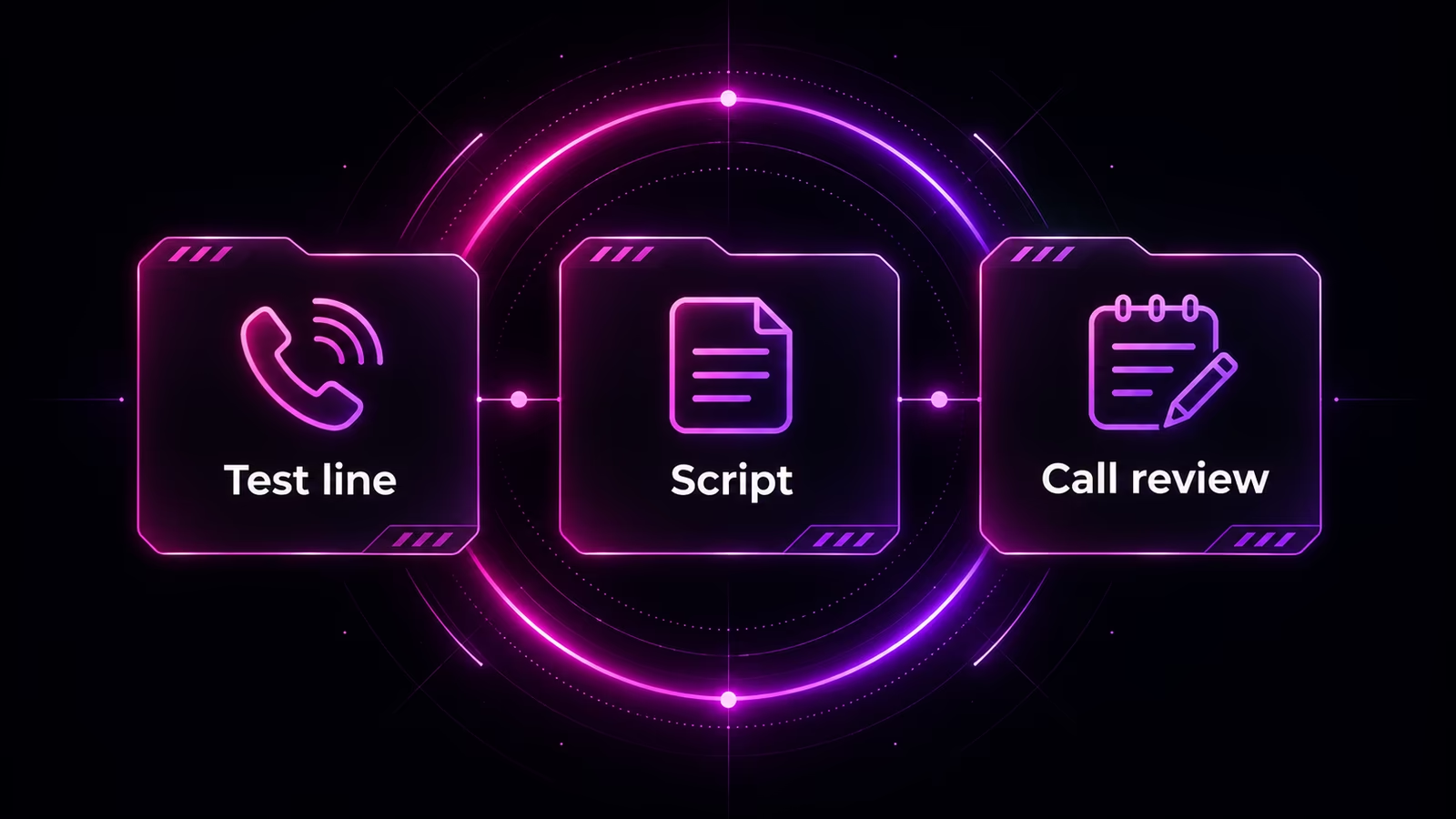
Ask your phone-system owner whether you can test on a dedicated number or internal line with fictional or approved test records. Confirm that any later live trial uses the routing and coverage you actually intend to run.
Can I use the same script on the phone?
Keep the business rules. Adapt what the agent says when it reads a number back, waits for a correction, or offers another route. Use the same expected outcome when you test those changes.
What can we review if calls are not recorded?
In rehearsals, an observer can score what was said and compare it with the test record and transfer outcome. For a live pilot, have the business decide what it may collect and whether approved logs and manual observations provide enough evidence to supervise the work.
Explore the AI Action Plan